
10 Fresh Backyard Wall Ideas

Backyard walls are more than just boundaries; they are design opportunities that define space, enhance privacy, and express creativity. From living plant walls to textured stone or modern metal panels, backyard walls can transform ordinary outdoor spaces into stunning retreats. Whether you prefer natural, rustic, or modern aesthetics, thoughtful design choices and material preparation can make your wall both functional and beautiful. Below are ten fresh backyard wall ideas that will inspire you to create a space full of personality, style, and purpose.
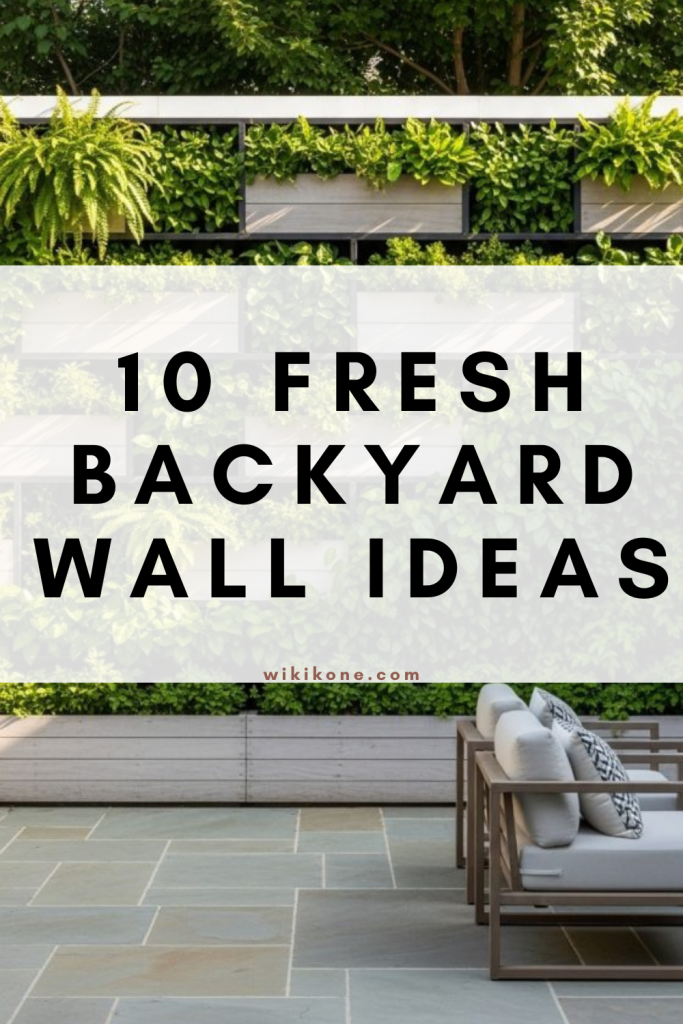
1. Vertical Garden Living Wall
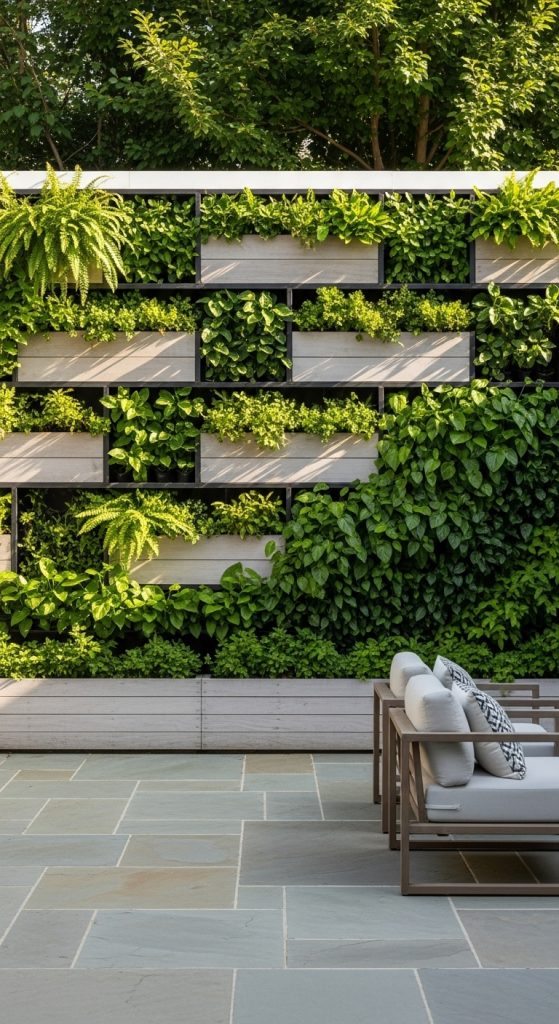
A vertical garden living wall is one of the most dynamic ways to add life and color to your backyard. This concept transforms a plain wall into a thriving display of plants and greenery. Begin by selecting a sturdy wall that receives adequate sunlight. Install a frame or modular planting system that supports planters or fabric pockets for your chosen plants.
Preparation involves waterproofing the wall surface to prevent moisture damage. Choose lightweight soil and include a drip irrigation system for consistent watering. Select plants that suit your local climate, such as ferns, succulents, or trailing ivy for low maintenance. Living walls not only beautify outdoor spaces but also improve air quality and create a cooling effect. To enhance structure, incorporate wooden or metal borders for a polished finish. This type of wall works beautifully behind patios or outdoor seating areas, creating a refreshing, natural backdrop. The result is a lush, green oasis that brings both texture and life to your backyard environment.
2. Textured Stone Wall
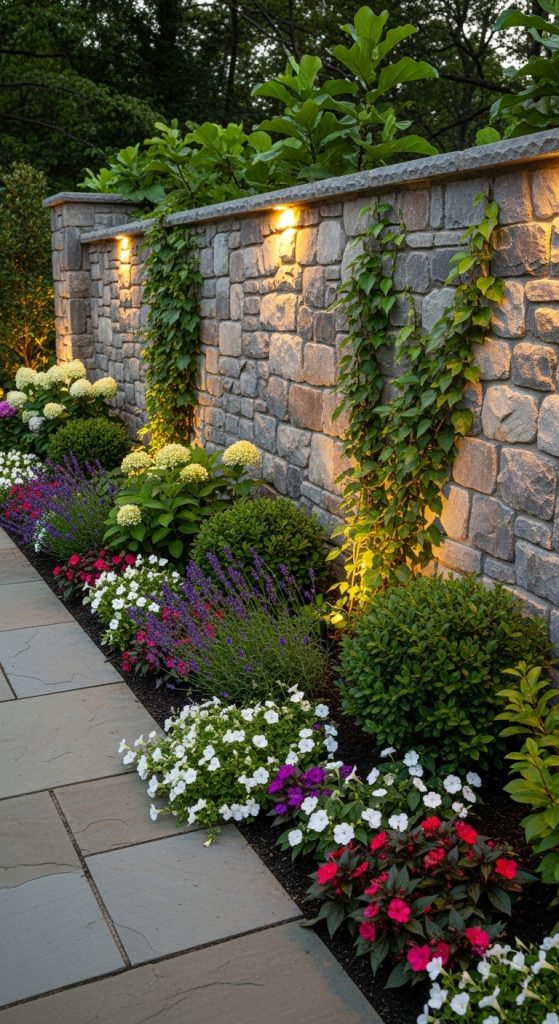
A textured stone wall adds a sense of permanence, luxury, and natural beauty to any backyard. It works equally well in traditional and modern landscapes, providing both texture and durability. To begin, select stone materials that complement your outdoor style, such as limestone, sandstone, slate, or fieldstone. Determine whether you prefer a dry-stacked look or a mortared wall for a more structured finish.
Preparation starts with laying a strong concrete foundation for stability. Clean and level the ground before beginning construction. For dry-stacked walls, carefully arrange stones of varying sizes to create a balanced and natural pattern. Use mortar for added support in taller or retaining walls. You can enhance the look by adding integrated lighting or climbing plants that soften the texture. A stone wall pairs beautifully with natural landscaping and water features. Its timeless appeal ensures durability against weather conditions while adding a sense of grounded elegance to your backyard retreat.
3. Wooden Slat Privacy Wall
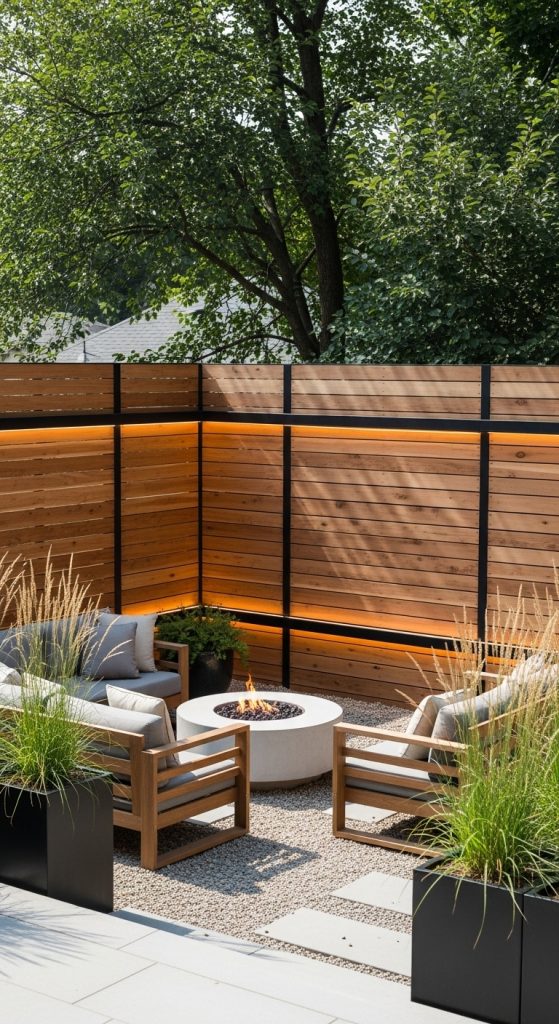
A wooden slat wall provides both privacy and modern elegance. The clean, horizontal lines of wooden slats complement contemporary backyard designs, offering a blend of warmth and structure. Start by choosing weather-resistant wood like cedar, redwood, or pressure-treated pine. Measure the area where the wall will stand and install sturdy vertical posts in concrete footings for stability.
During preparation, sand and stain the wood to protect it from moisture and UV exposure. Decide on the spacing between slats based on the desired level of privacy and airflow. You can paint or leave the wood natural for a minimalist appearance. Combine wood with metal frames for added strength and visual contrast. This wall style works perfectly as a backdrop for outdoor lounges, decks, or garden areas. It can also be paired with climbing plants or string lights for ambiance. A wooden slat privacy wall offers a sleek and functional way to define backyard boundaries while maintaining a natural aesthetic.
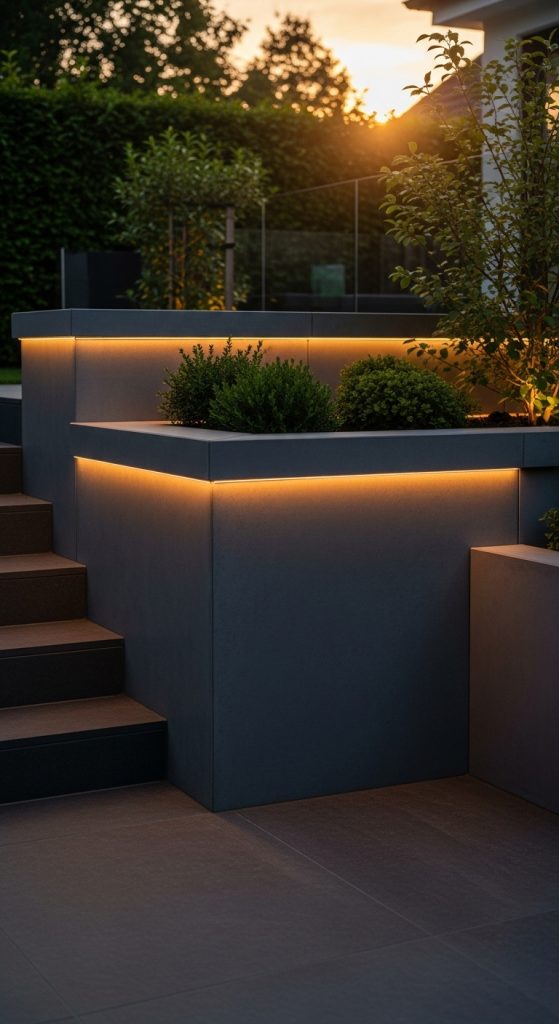
4. Concrete Retaining Wall with Modern Finishes
A concrete retaining wall brings structural strength and sleek contemporary style to your backyard. Ideal for sloped or terraced landscapes, it helps manage soil levels while serving as a bold design feature. Start by assessing the height and function of your retaining wall. Excavation and proper drainage planning are critical during preparation.
Use reinforced concrete with embedded steel rebar for strength. Once poured and cured, smooth the surface or apply finishes such as stucco, textured paint, or stone veneer to achieve the desired look. For added style, integrate built-in planters or lighting into the wall design. Polished or exposed aggregate finishes give the wall a sophisticated, urban appearance. Concrete walls pair well with minimalist landscaping and modern outdoor furniture. The neutral tones and durable construction ensure longevity and easy maintenance. A well-built concrete retaining wall not only supports the landscape but also adds a clean architectural element to any backyard setting.
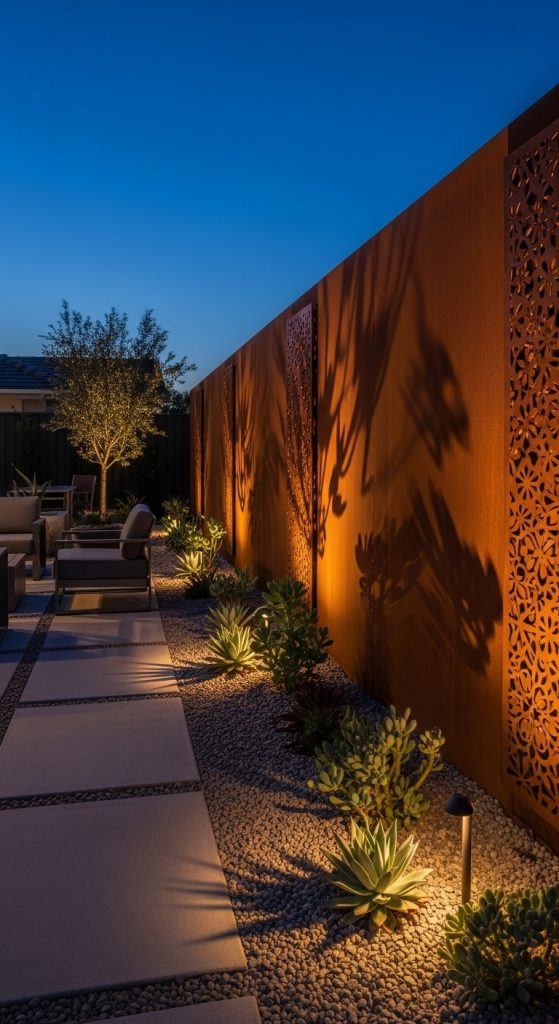
5. Metal Panel Wall
Metal panel walls are perfect for homeowners seeking an industrial or modern backyard aesthetic. Durable and weather-resistant, materials like corten steel, aluminum, or galvanized panels can withstand harsh outdoor conditions while adding visual contrast. Begin by measuring and framing the desired wall section using treated timber or metal supports.
Preparation includes ensuring the panels are corrosion-resistant and properly sealed. For corten steel, allow natural weathering to develop a rustic patina that deepens over time. Aluminum or powder-coated panels offer a sleek, polished finish in various colors. You can also add perforated or laser-cut designs to create patterns or shadow play when illuminated. Pair the metal wall with natural elements such as stone paving, wooden furniture, or greenery for balance. This idea works well for garden boundaries, accent walls, or behind water features. A metal panel wall delivers modern sophistication, low maintenance, and unique visual appeal that instantly elevates backyard design.
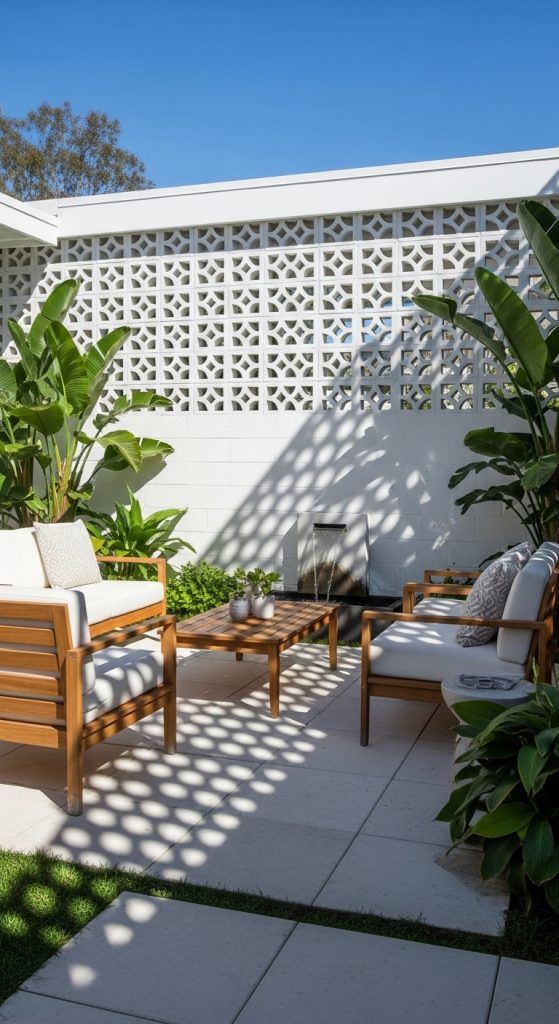
6. Decorative Concrete Block Wall
Decorative concrete blocks, also known as breeze blocks or screen blocks, offer a retro yet stylish wall solution that combines function and design. Begin by selecting patterned blocks that allow partial visibility and airflow while maintaining privacy. Common patterns include geometric or floral cutouts, often seen in mid-century modern designs.
Preparation requires a solid concrete footing and mortar mix for stable installation. Stack and align blocks carefully, using spacers to maintain consistent joints. Once installed, fill top rows with concrete caps for a clean finish. You can paint or leave the blocks natural depending on the overall design palette. Decorative concrete block walls work well as partial dividers, garden borders, or poolside screens. The patterns cast interesting light and shadow effects throughout the day, creating visual movement. Combine this design with minimalist landscaping and outdoor furniture to achieve a timeless, breezy aesthetic that enhances both privacy and style.
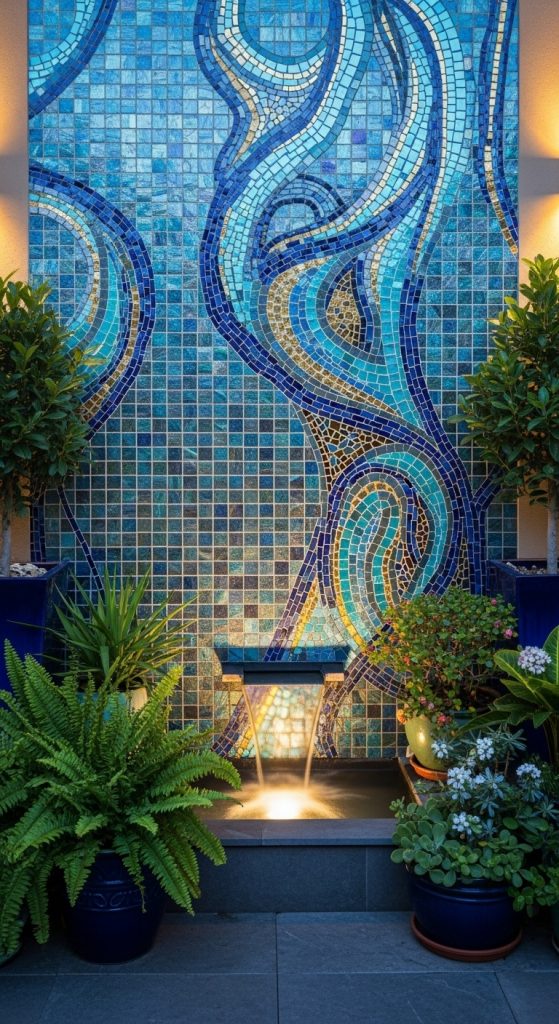
7. Mosaic Tile Accent Wall
A mosaic tile accent wall brings artistry and vibrant color to your backyard design. This concept transforms a plain wall into a decorative focal point. Begin by selecting outdoor-rated tiles such as porcelain, glass, or ceramic that can withstand changing weather conditions. Choose a pattern or color palette that complements your garden theme.
Preparation involves cleaning and priming the wall surface, ensuring it is smooth and dry. Apply waterproof tile adhesive evenly before laying each tile carefully. Use spacers for precision and finish with outdoor-grade grout for durability. Mosaic walls can depict abstract designs, nature-inspired motifs, or simple geometric arrangements. This style works beautifully near patios, outdoor kitchens, or pool areas. Add accent lighting to emphasize the shimmer of glass or metallic tiles in the evening. A mosaic tile wall expresses creativity and craftsmanship, transforming your backyard into an artistic outdoor gallery filled with color and texture.
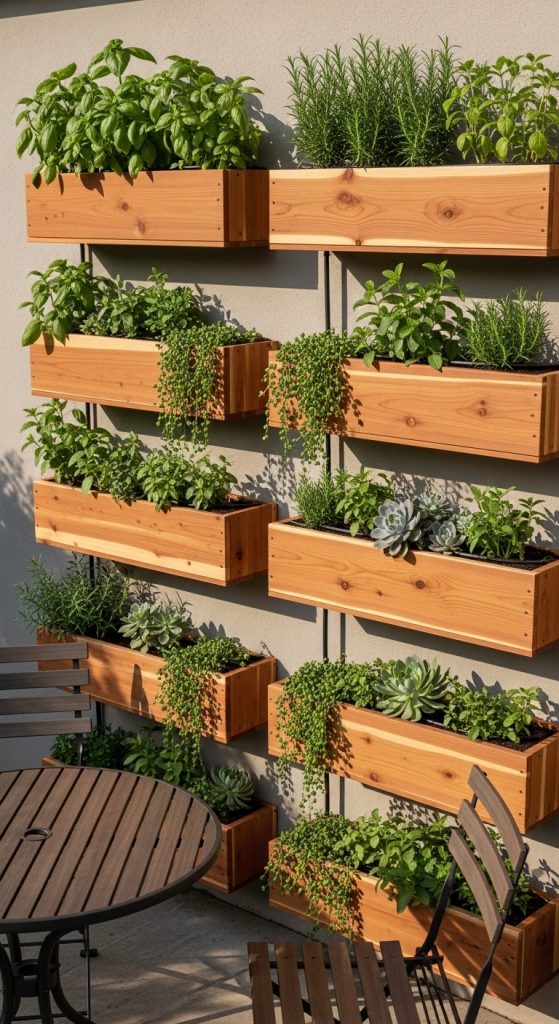
8. Vertical Wooden Planter Wall
A vertical wooden planter wall combines greenery and craftsmanship to enhance backyard ambiance. This design features stacked or hanging planters attached to a wooden framework. Start by building a vertical frame using durable timber such as cedar or pressure-treated pine. Attach planter boxes or pockets in staggered rows to allow balanced light exposure for plants.
Preparation involves sealing the wood with outdoor varnish to resist moisture and decay. Use lightweight potting mix and install a simple drip irrigation system for easy maintenance. Choose plant varieties suitable for vertical growth such as herbs, ferns, or small flowering plants. You can add accent lighting beneath each row for nighttime visual appeal. This type of wall is ideal for patios or small backyards where ground space is limited. The combination of natural wood and fresh greenery provides texture, fragrance, and tranquility. A vertical planter wall is both decorative and eco-friendly, turning your backyard into a lush living feature.
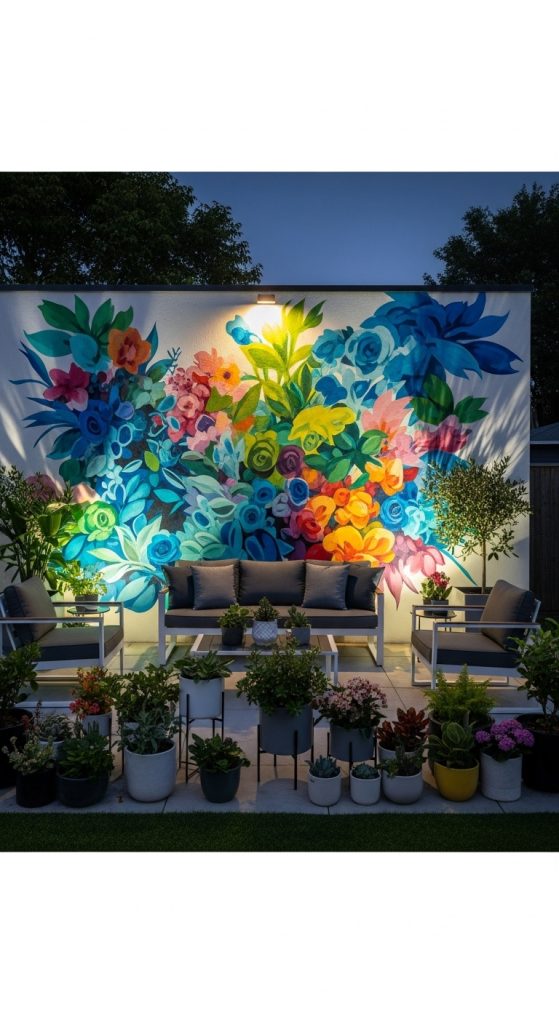
9. Painted or Murale Artistic Wall
A painted or mural wall introduces creativity and individuality into your outdoor design. It allows you to turn a blank wall into an expressive work of art. Begin by selecting a waterproof, UV-resistant exterior paint designed for outdoor use. Prepare the surface by cleaning, sanding, and applying a primer for even adhesion.
Choose a theme or color palette that complements your garden aesthetic. Popular options include abstract patterns, nature scenes, geometric art, or coastal-inspired motifs. You can hire a mural artist or paint it yourself using stencils for precision. Once completed, seal the mural with a weatherproof clear coat to protect it from fading or moisture damage. Add subtle lighting to highlight the artwork at night. A mural wall transforms outdoor areas into dynamic, inspiring spaces filled with personality and charm. This design suits patios, poolside areas, or garden entrances, offering a custom touch that reflects your personal creativity.
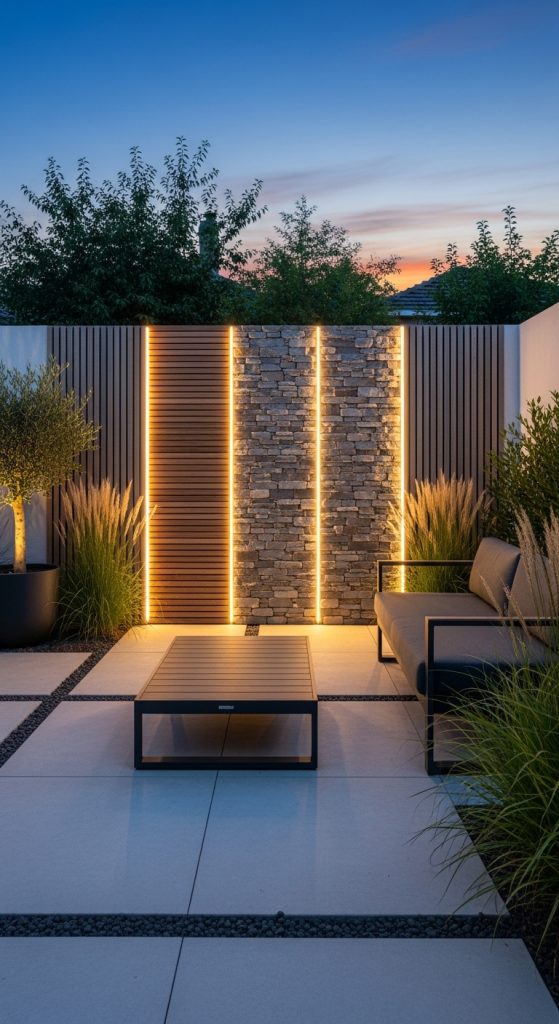
10. Mixed Material Feature Wall
A mixed material feature wall showcases design versatility by combining different textures and finishes. This approach creates visual interest and depth while maintaining cohesion. Begin by selecting two or more materials that complement each other, such as wood with stone, concrete with metal, or tile with glass.
Preparation involves planning proportions carefully to balance materials without overwhelming the design. Use proper anchors and adhesives suited for each material type. For example, natural stone may require mortar, while wood panels need stainless fasteners. Incorporate LED lighting strips or wall sconces to highlight textures and create nighttime ambiance. Mixed material walls work well as central features behind seating areas or garden lounges. The contrast of natural and industrial elements adds sophistication and character. This flexible design approach allows for creativity and adaptability across different backyard styles, ensuring that your wall remains both functional and visually compelling for years to come.
About Me

Chesung Subba
Author/Writer
Hello, I'm Chesung Subba, a passionate writer who loves sharing ideas, stories, and experiences to inspire, inform, and connect with readers through meaningful content.
Follow Me
Connect with me and be part of my social media community.
Leave a Reply