10 Tiny House Kitchen Design Essentials

Designing a kitchen in a tiny house is both a challenge and an opportunity. With limited space, every inch must be functional, beautiful, and efficient. The kitchen remains the heart of any home, even when square footage is scarce. By incorporating the right materials, layouts, and organization systems, you can create a compact yet fully equipped cooking space that suits modern living. Below are ten essential design ideas to help you plan the perfect tiny house kitchen.
1. Space-Saving Layouts
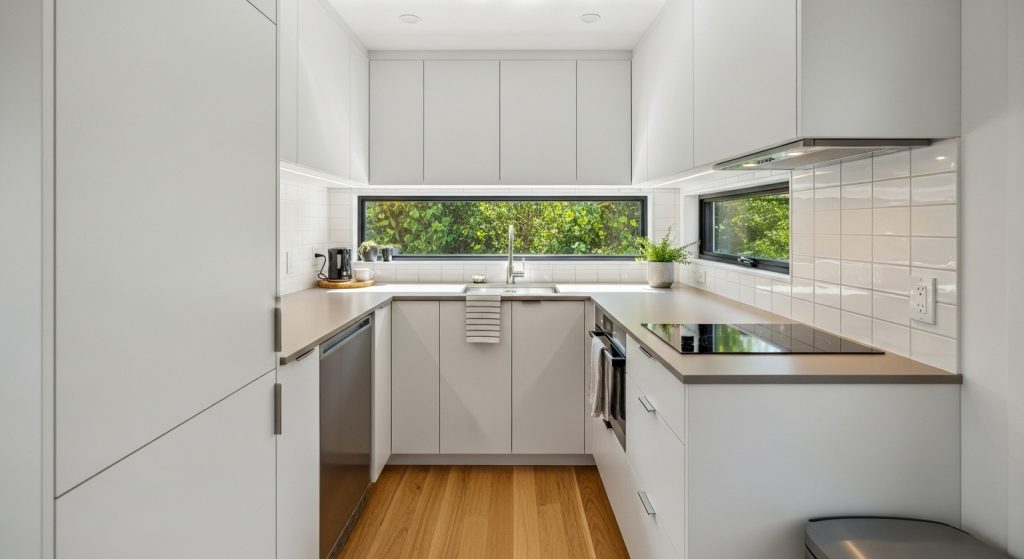
The foundation of a successful tiny house kitchen lies in its layout. In small spaces, every element must be strategically placed to maximize function and flow. The most effective layouts for tiny kitchens include galley, L-shaped, and single-wall designs. A galley kitchen uses two parallel counters and is perfect for long, narrow spaces. The L-shaped layout allows for corner storage and can separate cooking from preparation zones. Single-wall kitchens work best when paired with multipurpose islands or foldable counters.
When preparing to design your layout, measure the available space accurately and plan for walking clearance of at least three feet between work zones. Consider using 3D design software to visualize placement before building. Choose durable yet slim materials like plywood cabinets with laminate finishes to reduce weight. Thoughtful planning ensures that your small kitchen feels open and functional rather than cramped.
2. Multi-Functional Countertops
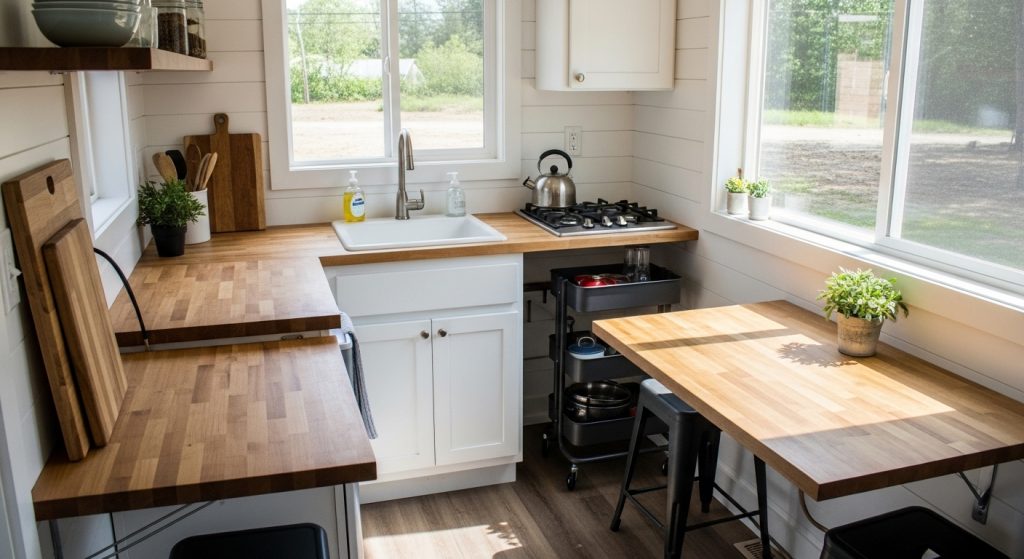
Countertops in tiny kitchens must do more than provide a surface for meal prep. They can double as dining areas, cutting stations, or extra storage. A practical approach is to install a fold-down counter or a pull-out extension that can be tucked away when not in use. Materials such as butcher block, bamboo, or compact laminate are ideal due to their light weight and ease of maintenance.
During preparation, ensure your counters are at an ergonomic height of around 36 inches to promote comfort. Consider integrating a sink cover that doubles as a chopping board or drying rack. For even more flexibility, a rolling kitchen cart can extend your workspace when cooking larger meals. The goal is to use horizontal surfaces efficiently while maintaining clear visual lines that make the kitchen appear larger.
3. Smart Storage Solutions
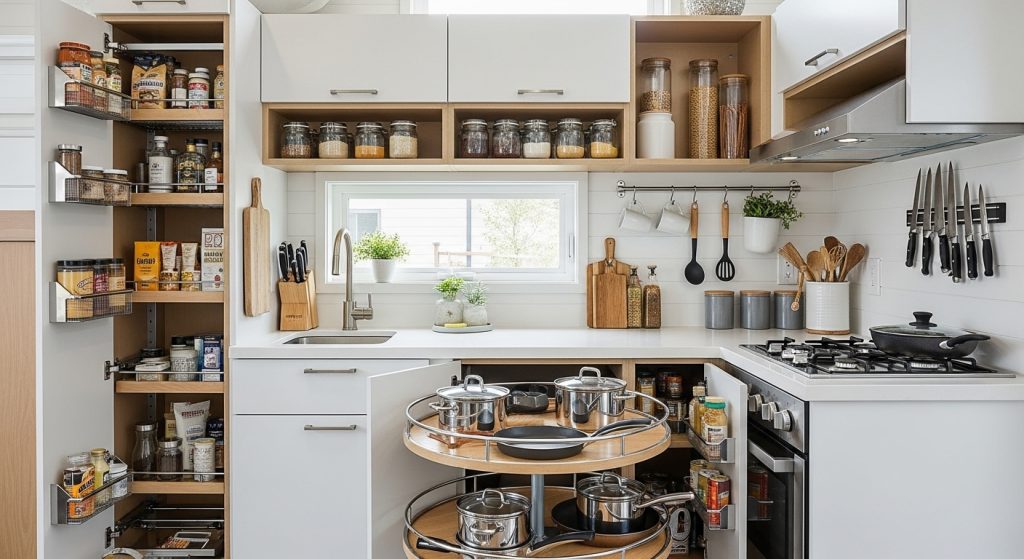
Storage is one of the biggest challenges in a tiny kitchen. To maintain organization, prioritize vertical and hidden storage. Install overhead cabinets that reach the ceiling to use every inch of wall space. Add hooks or magnetic strips for hanging utensils, knives, and mugs. Pull-out pantry shelves and corner carousels help utilize hard-to-reach areas effectively.
Materials like lightweight plywood or medium-density fiberboard can be used for cabinetry to reduce load without sacrificing durability. Consider adding open shelving with adjustable brackets to adapt to changing needs. During preparation, sort items by frequency of use and store essentials within easy reach. Hidden drawers inside toe kicks or under benches provide extra room for seldom-used tools. Smart storage keeps your kitchen clutter-free and ensures a smooth cooking experience in a small footprint.
4. Compact Appliances
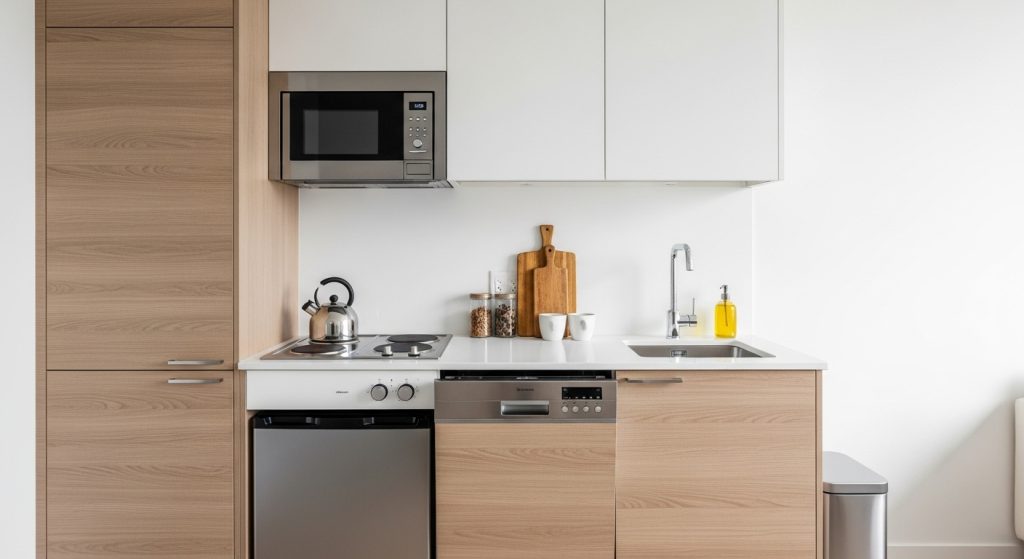
In a tiny kitchen, large appliances can overwhelm the space. Opt for compact, energy-efficient models that combine functionality and convenience. Mini fridges, two-burner stoves, and drawer-style dishwashers are perfect examples. Look for appliances that can serve multiple purposes, such as a convection microwave that bakes, grills, and reheats.
Before purchasing, measure your space carefully and verify the ventilation requirements of each appliance. Choose models designed for RVs or small apartments, as these are often lighter and more efficient. During installation, use built-in designs to maintain a clean, streamlined look. Compact appliances reduce power consumption and free up counter space for prep and dining. Proper planning ensures you enjoy modern convenience without overcrowding your tiny kitchen.
5. Efficient Lighting Design
Lighting can make or break a small kitchen’s atmosphere. In a compact space, proper lighting enhances visibility and creates a sense of openness. Combine natural light with layered artificial lighting for the best results. Under-cabinet LED strips illuminate work areas, while recessed ceiling lights provide general brightness. A small pendant light above a dining counter can serve as both task and decorative lighting.
When preparing your lighting plan, consider the color temperature of bulbs. Warm white light creates coziness, while cool white enhances clarity for cooking. Materials like reflective backsplash tiles or glossy cabinet finishes can help bounce light throughout the room. Energy-efficient LED lights are ideal for tiny houses since they produce minimal heat and use less power. A well-lit kitchen feels larger and more welcoming, improving both functionality and ambiance.
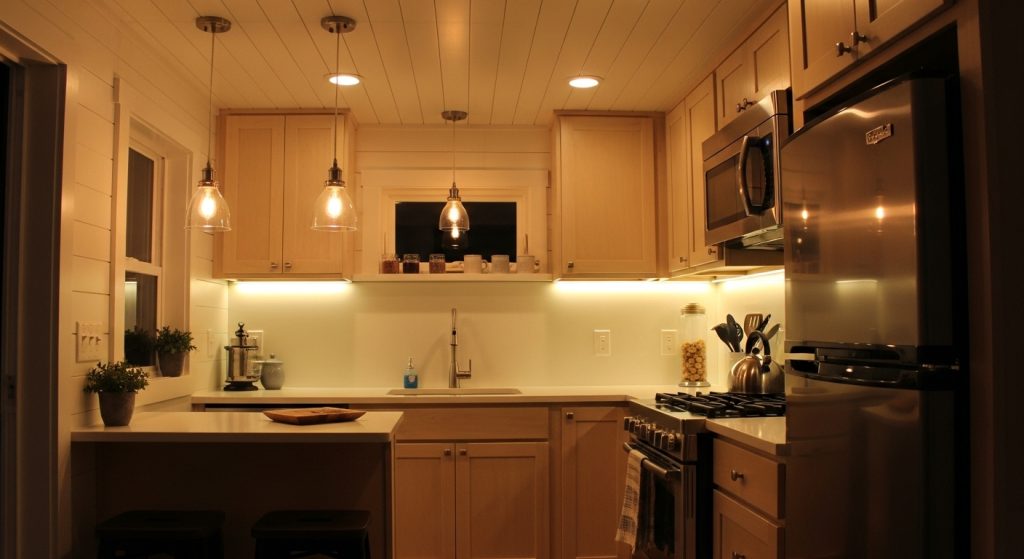
6. Durable and Lightweight Materials
Choosing the right materials is crucial for balancing durability, aesthetics, and weight in a tiny home. Since the entire structure often moves or shifts, materials should be light yet strong. Plywood, bamboo, and aluminum are excellent choices for cabinets and fixtures. For countertops, consider composite stone or laminate to minimize weight while maintaining durability.
Before installation, seal wood surfaces to prevent moisture damage, as tiny kitchens tend to have limited ventilation. Use water-resistant paints and finishes to extend longevity. During preparation, gather all materials in advance to avoid delays in construction. Selecting high-quality materials ensures that your kitchen remains functional and visually appealing for years. Durable finishes also reduce the need for constant maintenance, a key benefit in small living environments.
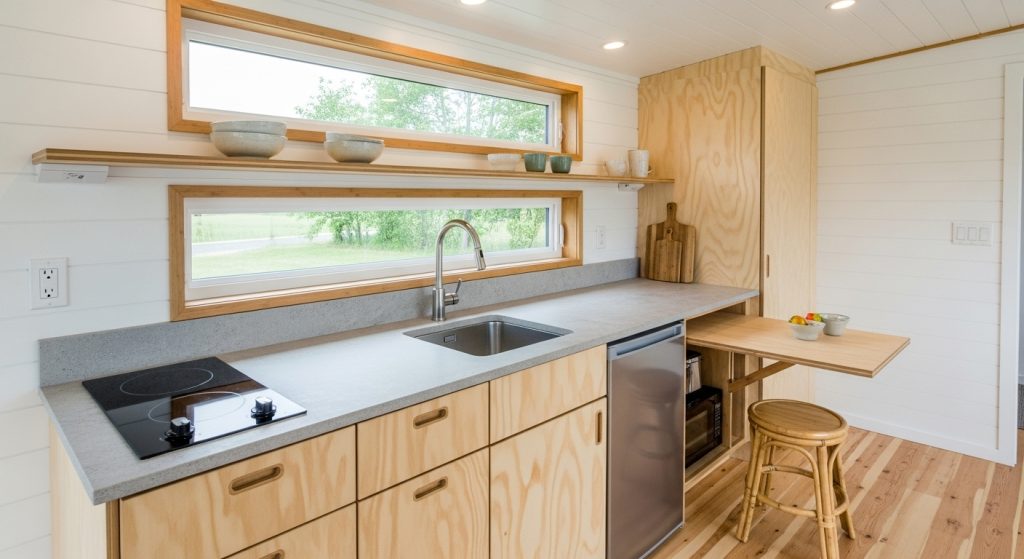
7. Clever Use of Vertical Space
Maximizing vertical space transforms a small kitchen into a practical and stylish area. Utilize tall shelving units, hanging pot racks, and wall-mounted spice organizers to keep counters free from clutter. Vertical storage not only saves floor space but also draws the eye upward, creating the illusion of a taller room.
During preparation, plan wall placement carefully to maintain accessibility and avoid overloading. Use lightweight brackets and screws suitable for your wall type, especially in mobile tiny homes. Materials such as reclaimed wood or metal shelving can add both strength and character. Combining open shelves with closed cabinetry keeps visual balance while maintaining easy access to everyday items. Strategic vertical design helps every inch work efficiently, proving that even the smallest kitchens can offer full functionality.
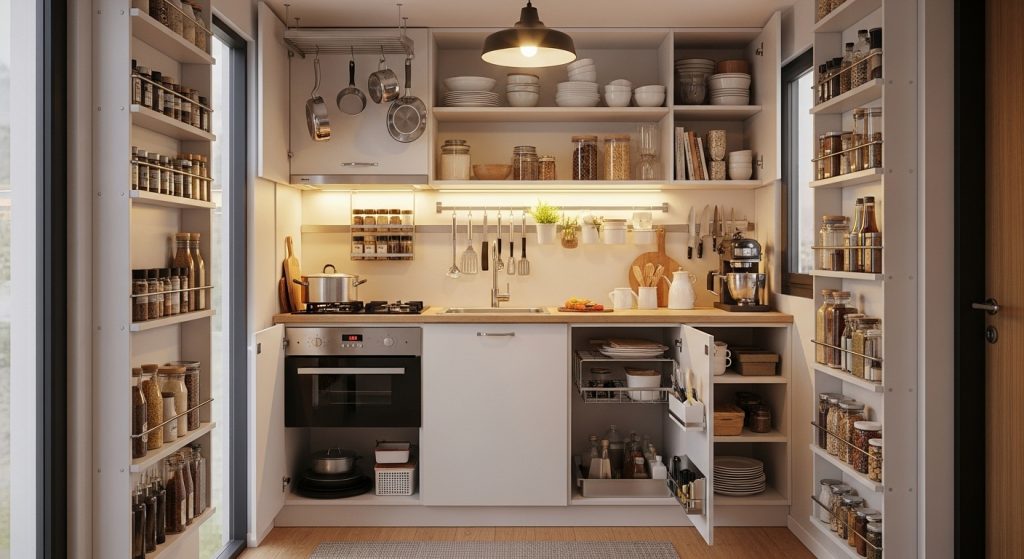
8. Integrated Dining Options
In a tiny house kitchen, a separate dining room is rarely possible. Instead, integrate dining options into the kitchen design itself. Foldable tables, drop-leaf counters, and convertible islands provide flexible dining and prep spaces. A wall-mounted bar or pull-out table can serve as a breakfast nook or work desk when needed.
When preparing for installation, measure height and depth to ensure comfortable seating. Use lightweight stools that can be tucked under the counter when not in use. Choose durable materials like laminate or sealed wood that can withstand frequent use. Consider soft lighting above the dining area to define the space visually. Integrated dining solutions save space, reduce clutter, and add versatility to your kitchen. They ensure your compact home remains practical for both everyday meals and entertaining guests.
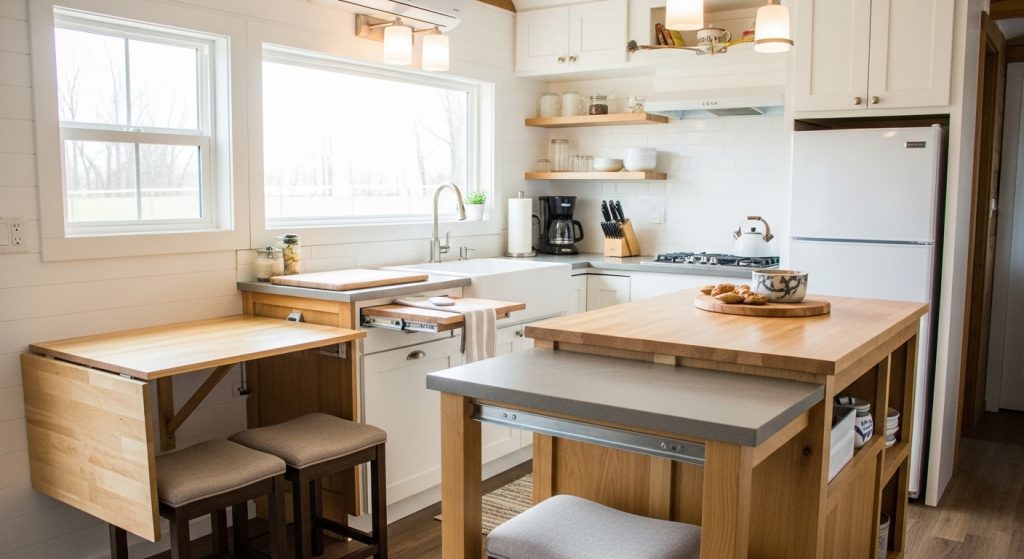
9. Easy-to-Clean Surfaces
In small kitchens, cleanliness is essential because clutter and grime become noticeable quickly. Choosing easy-to-clean surfaces simplifies maintenance and enhances hygiene. Nonporous materials such as stainless steel, quartz, and laminate are ideal for countertops and backsplashes. These surfaces resist stains and moisture while requiring minimal upkeep.
When preparing for installation, seal all joints and edges properly to prevent water from seeping into seams. Use wall tiles with smooth finishes to make wiping easier. Select cabinet paints or finishes with a washable coating. Keep cleaning supplies within easy reach, perhaps in a pull-out drawer under the sink. Regular maintenance not only keeps your kitchen looking new but also prevents odor buildup and mold growth. A clean kitchen is the cornerstone of comfort in any tiny home, ensuring health and longevity of materials.
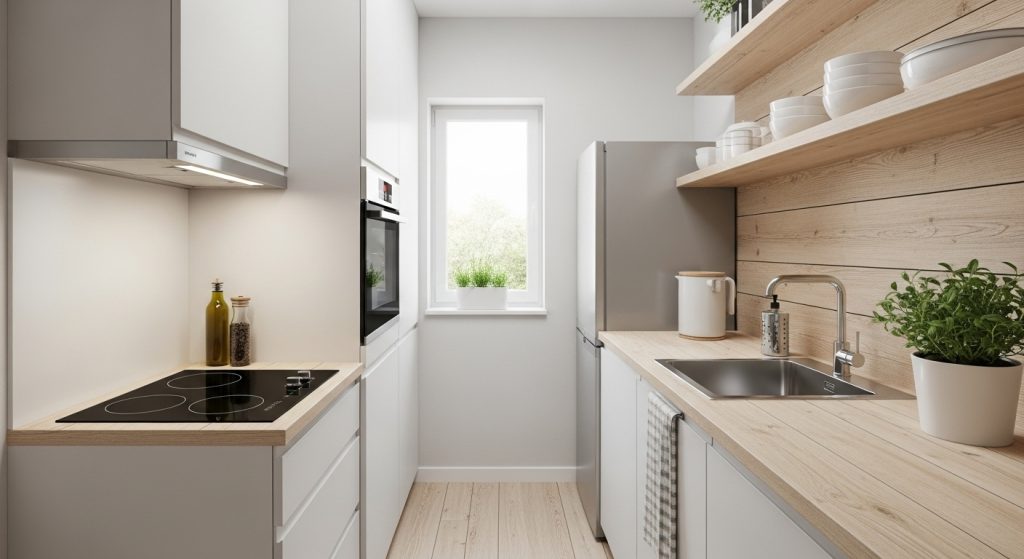
10. Personalized Aesthetic and Style
Even in limited space, style should never be sacrificed. The final touch to a successful tiny house kitchen is a cohesive and personalized design that reflects your taste. Whether you prefer modern minimalism, rustic charm, or Scandinavian simplicity, choose colors, textures, and materials that harmonize.
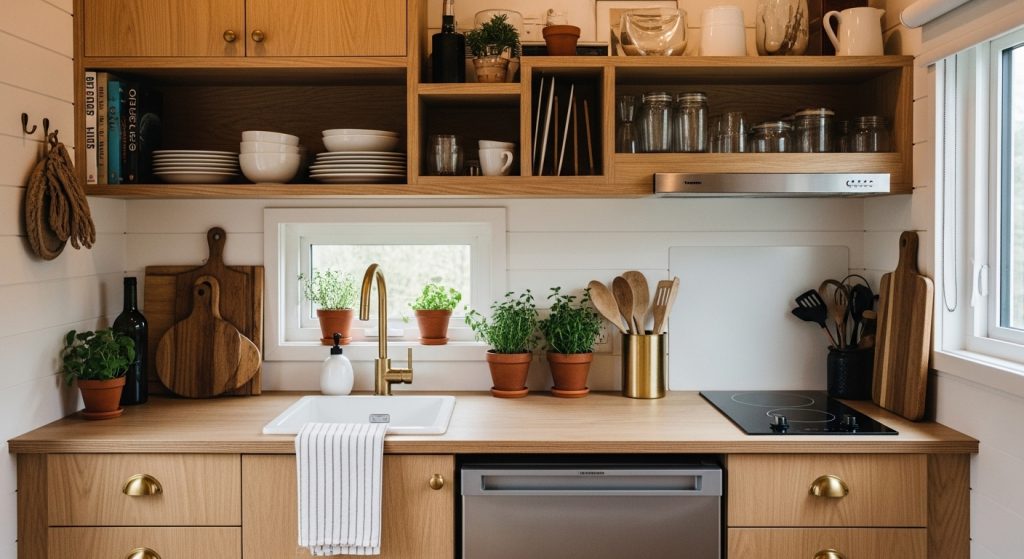
During preparation, create a mood board to plan your color palette and finishes. Light tones make spaces appear larger, while darker accents can add depth. Materials such as reclaimed wood, matte black fixtures, and brushed brass handles provide unique character. Balance aesthetics with functionality by ensuring that decorative items do not interfere with usability. Personal touches like open shelving with curated dishes or potted herbs can make your tiny kitchen feel warm and inviting. A well-styled kitchen elevates the living experience and transforms small-scale living into something truly special.
About Me

Chesung Subba
Author/Writer
Hello, I'm Chesung Subba, a passionate writer who loves sharing ideas, stories, and experiences to inspire, inform, and connect with readers through meaningful content.
Follow Me
Connect with me and be part of my social media community.
Leave a Reply