
10 DIY workspace overhaul ideas

A workspace is more than just a desk and a chair. It is a place where productivity, creativity, and comfort intersect. Overhauling your workspace can significantly boost efficiency, motivation, and overall wellbeing. These ten DIY ideas will help you transform your workspace into an organized, aesthetic, and functional haven without spending a fortune.
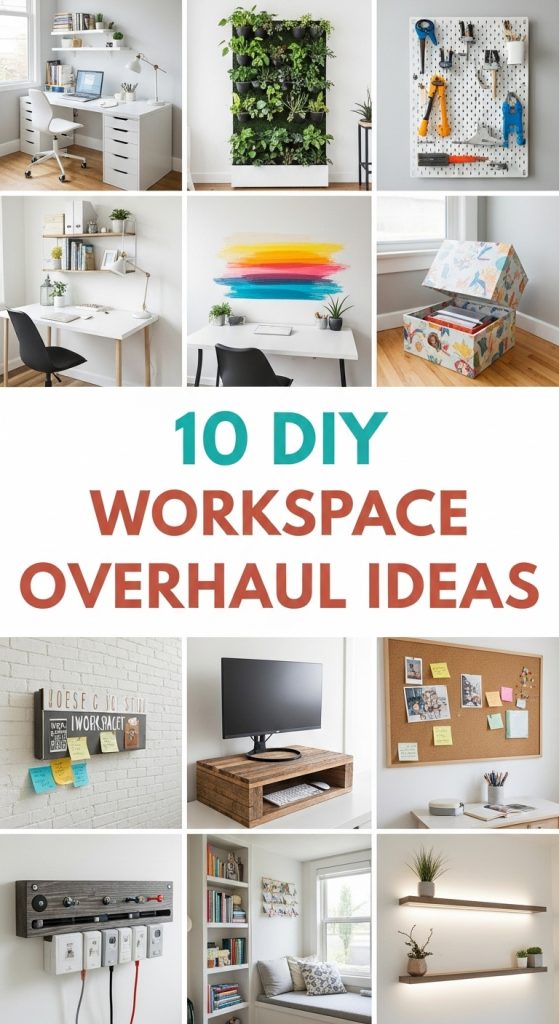
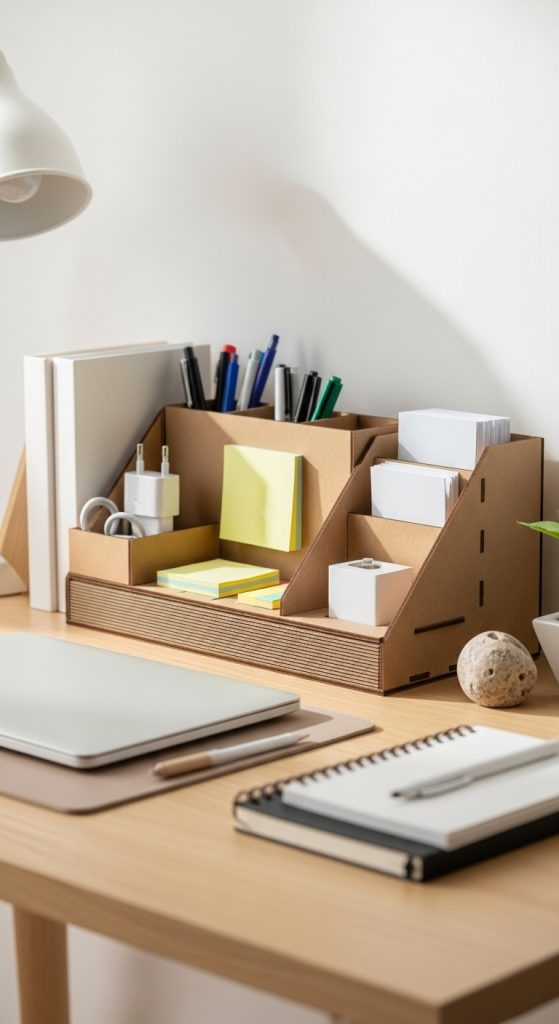
1. Personalized Desk Organizer
A cluttered desk can hinder productivity. Creating a personalized desk organizer allows you to store stationery, notebooks, and gadgets neatly while adding a touch of personality. Materials for this project include cardboard or wood, glue, paint, brushes, and optional decorative items like washi tape or stickers. Begin by deciding the shape and compartments required based on your items. Cut the cardboard or wood into appropriate sizes and assemble using glue or screws. Paint or decorate the organizer to match your workspace theme. Adding small compartments for pens, sticky notes, and chargers will keep everything within reach. This DIY organizer can be adapted in size and shape to fit your desk perfectly. It not only keeps your space tidy but also reflects your personal style, making the workspace feel uniquely yours. Regularly declutter the organizer to maintain efficiency and prevent accumulation of unnecessary items.
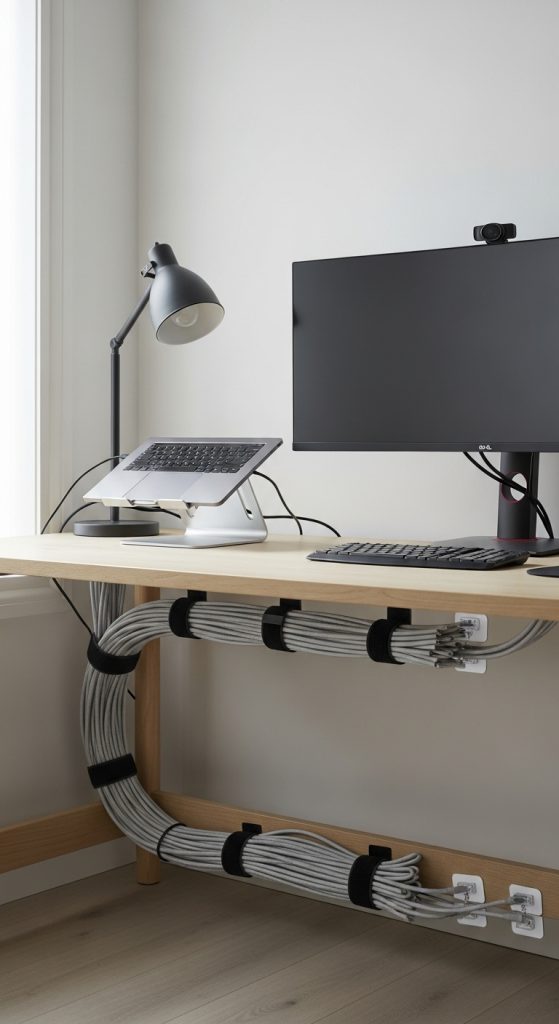
2. Cable Management System
Messy cables are both an eyesore and a hazard in any workspace. A DIY cable management system can help organize wires for electronics, monitors, and chargers. Materials needed include cable clips, Velcro straps, cable sleeves, and adhesive hooks. Start by detangling all wires and identifying each cable’s function. Use cable clips to secure wires along desk edges or behind furniture. Velcro straps are perfect for bundling cables, making adjustments easy. Cable sleeves can group multiple cords together for a cleaner look. Consider labeling each cable for faster identification. This setup not only improves aesthetics but also reduces stress caused by a chaotic workspace. A well-organized cable system prevents damage to electronics and minimizes distractions, creating a smoother workflow. Implementing this system is simple yet highly effective for both home offices and professional workspaces.
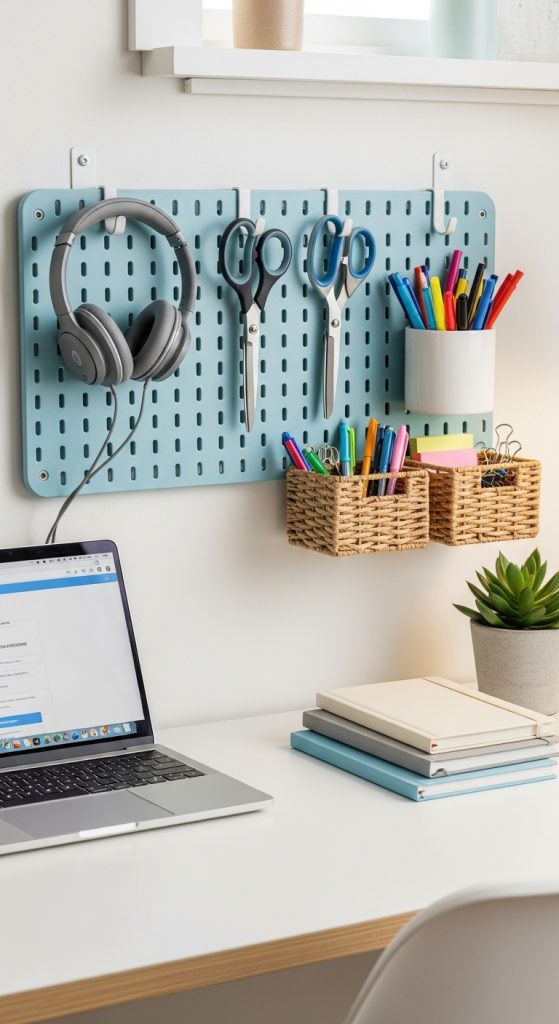
3. DIY Pegboard Wall
A pegboard wall is an excellent solution for maximizing vertical storage while keeping frequently used items accessible. Materials include a pegboard panel, hooks, screws, anchors, and optional paint for customization. Measure the wall space above your desk to determine the pegboard size. Install the board securely using screws and anchors to ensure stability. Paint the pegboard to match your room’s color scheme if desired. Use hooks to hang tools, stationery, headphones, or small decorative items. The pegboard provides a flexible storage solution, allowing you to rearrange hooks and accessories as your needs evolve. It creates an organized and visually appealing backdrop while freeing up desk space. Adding small baskets or trays to the pegboard can further enhance its storage capacity. This DIY project is particularly useful for artists, designers, and anyone needing quick access to tools or office essentials.
4. Customized Lighting Setup
Proper lighting is crucial for reducing eye strain and improving productivity. A DIY lighting setup can enhance ambiance and functionality. Materials may include LED strip lights, a desk lamp, a power extension, and dimmers. Begin by determining the areas that require illumination, such as the desk surface or shelves. LED strips can be attached under shelves or around the desk for ambient lighting. Adjustable desk lamps provide focused lighting for reading or detailed tasks. Adding a dimmer switch allows control over brightness, making it suitable for different times of day or tasks. Selecting warm or cool white lights can influence mood and concentration. Customizing lighting ensures a visually appealing and ergonomic workspace. Additionally, it can complement other decorative elements, creating a cohesive and inviting environment. Regularly cleaning light sources maintains brightness and extends the lifespan of bulbs or strips.
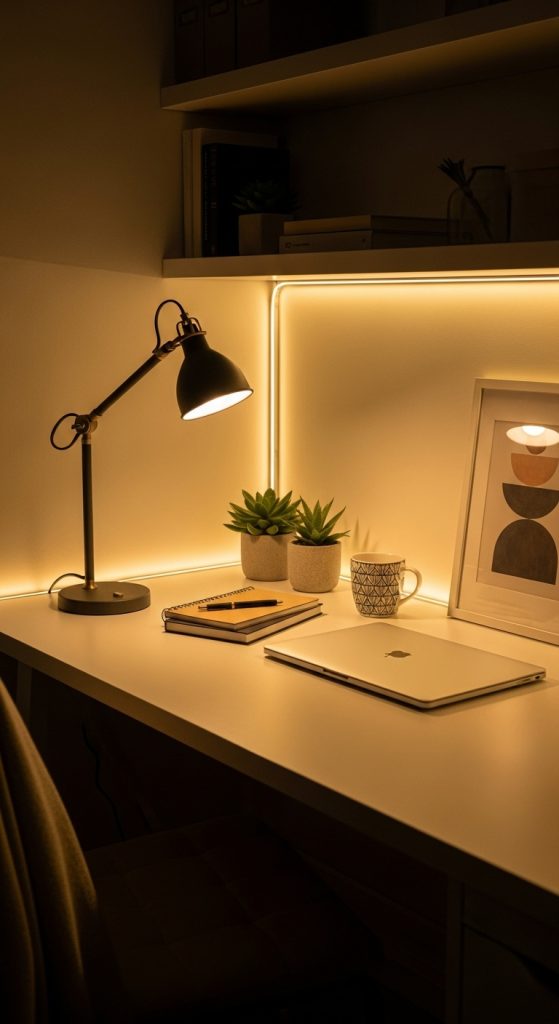
5. Floating Shelf Installation
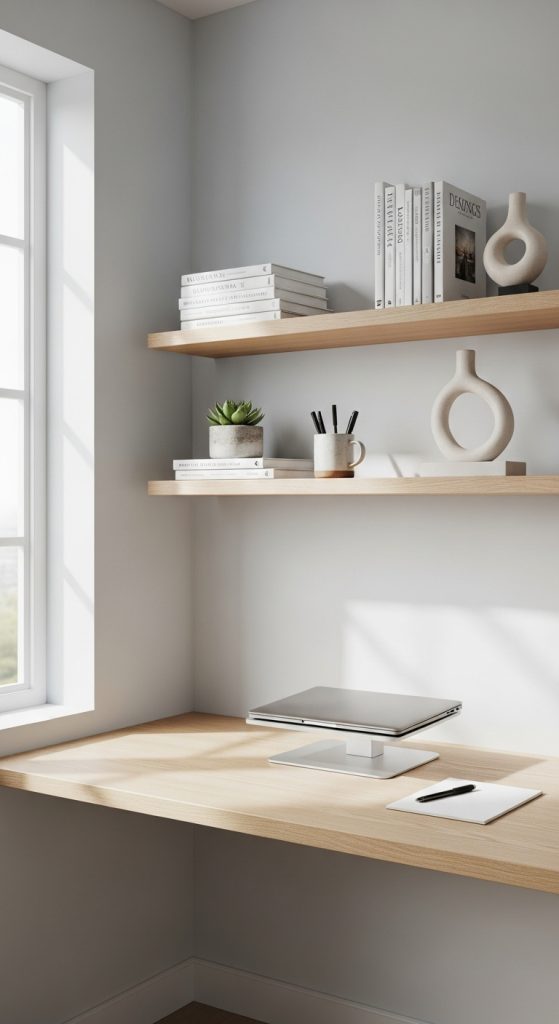
Floating shelves are a practical way to store books, decor, or office supplies while keeping the workspace uncluttered. Materials needed include wood or MDF panels, brackets, screws, anchors, a level, and paint or varnish. Measure the available wall space and decide the shelf dimensions. Secure brackets firmly using screws and anchors to ensure stability. Place the wood panels on the brackets and paint or varnish to match your workspace style. Floating shelves create additional storage without occupying floor space and can hold items ranging from plants to binders. They also allow for creative display arrangements, making your workspace visually appealing. Ensure heavier objects are placed closer to the wall to maintain balance. This DIY project combines functionality and aesthetics, transforming a bare wall into a dynamic and organized space.
6. DIY Whiteboard or Chalkboard
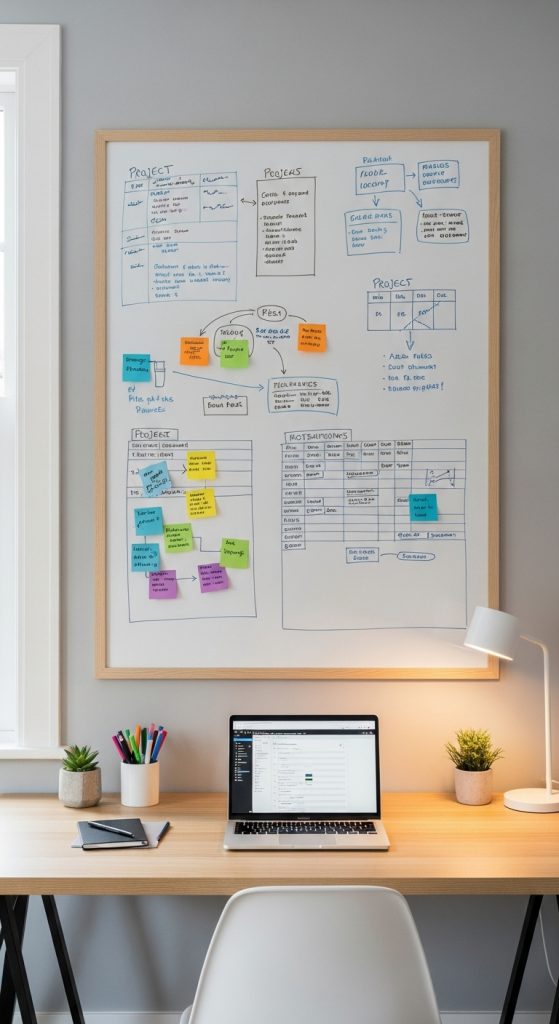
A whiteboard or chalkboard can help manage tasks, track projects, and brainstorm ideas efficiently. Materials include a whiteboard panel or chalkboard paint, markers or chalk, and a frame if desired. Choose a wall or section of your desk area for installation. For a framed option, attach the board securely to the wall using screws or adhesive hooks. If using chalkboard paint, follow instructions for surface preparation and multiple coats. The board serves as a central hub for notes, reminders, and creative ideas. Regularly updating the content encourages organization and ensures important tasks are not overlooked. This project also allows for aesthetic customization, incorporating colors, designs, or quotes. A DIY whiteboard or chalkboard is a versatile tool that enhances productivity while providing a dynamic visual element to the workspace.
7. Ergonomic Desk Accessories
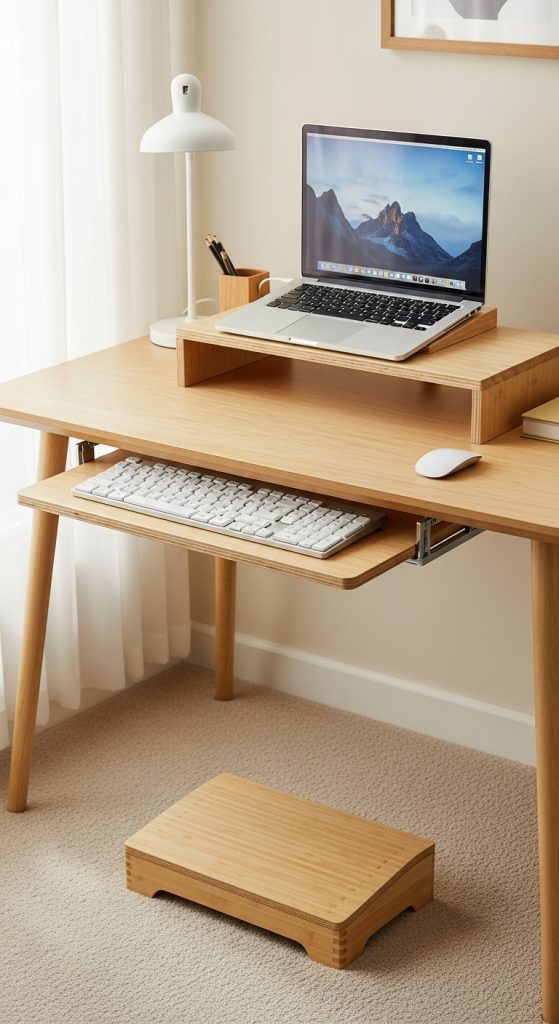
Creating an ergonomic workspace is essential for comfort and long-term health. DIY desk accessories such as monitor risers, keyboard trays, or footrests can improve posture and reduce strain. Materials may include wood, foam, screws, and non-slip pads. For a monitor riser, cut wood panels to the desired size and assemble a sturdy platform for your monitor. A keyboard tray can be fashioned from plywood or cardboard, ensuring it is adjustable or at a comfortable height. Foam or wooden footrests enhance seating posture and circulation. Incorporating these DIY accessories ensures your workspace is tailored to your body’s needs, promoting better focus and reducing fatigue. Ergonomic solutions are especially important for those spending extended hours at a desk. Investing time in this project pays off in increased comfort, productivity, and overall wellbeing.
8. Decorative Wall Panels
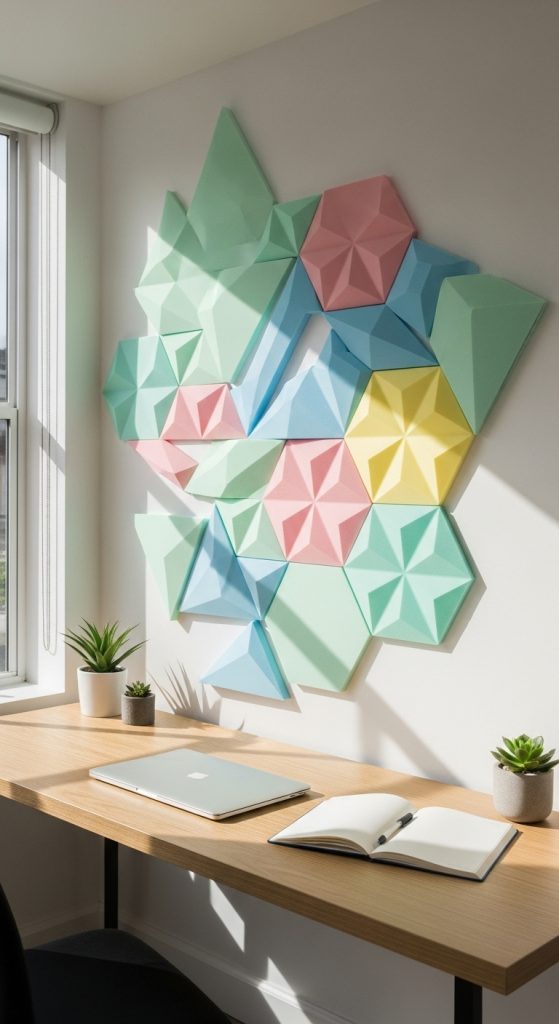
Decorative wall panels add personality and inspiration to your workspace. Materials may include foam sheets, fabric, cork, paint, and adhesives. Choose a wall section and decide on a design, such as geometric patterns, inspirational quotes, or color blocks. Cut foam or cork sheets into desired shapes and attach them to the wall using strong adhesive. Alternatively, cover panels with fabric for a textured, vibrant appearance. Wall panels not only improve aesthetics but can also provide sound absorption, reducing distractions. Combining functionality with decoration enhances the overall workspace experience. Regularly updating or rotating panels keeps the environment fresh and inspiring. This project allows for creative expression and personalizes the space, making it more motivating and enjoyable to work in.
9. DIY Plant Corner
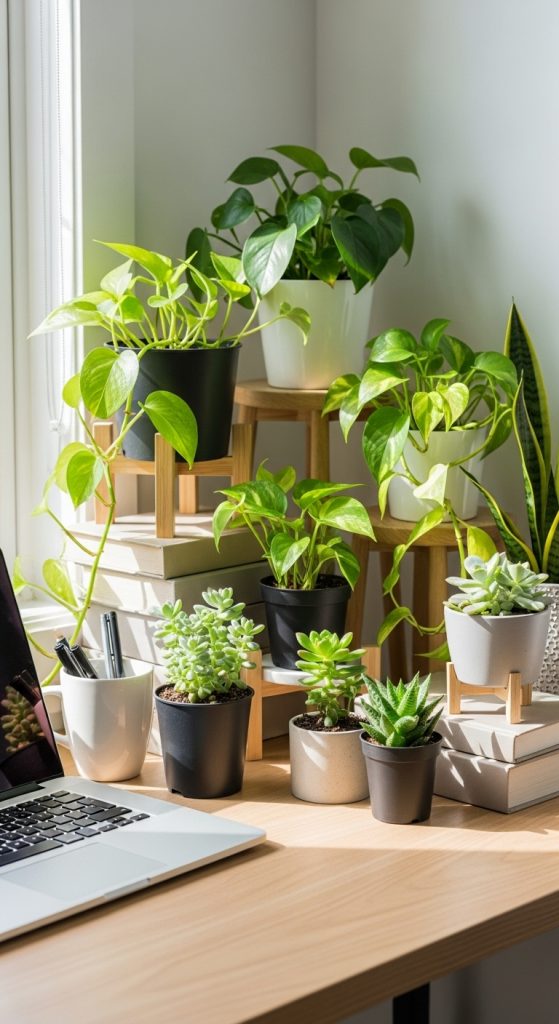
Introducing greenery into your workspace enhances mood, reduces stress, and improves air quality. Materials include small potted plants, planters, soil, pebbles, and plant stands. Select plants that thrive indoors with minimal sunlight, such as succulents, pothos, or snake plants. Create a designated area on your desk, shelf, or a small corner for the plants. Arrange pots in varying heights for visual interest, using plant stands or stacking books. Adding pebbles or decorative soil layers enhances aesthetics. Regularly water and care for the plants, ensuring proper light and humidity. A DIY plant corner not only beautifies your workspace but also contributes to a healthier environment. It provides a natural, calming element that can improve focus and productivity while reflecting a personal touch of nature indoors.
10. Creative Bulletin Board
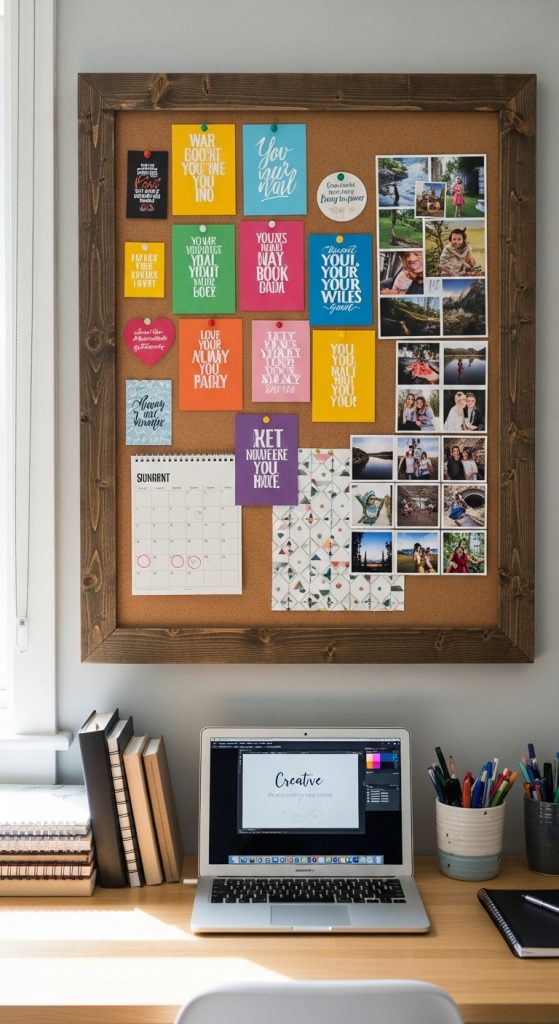
A bulletin board is a versatile tool for organizing reminders, inspirational images, and schedules. Materials include corkboard or foam board, pins or clips, decorative paper, and frames. Choose a wall space where the board is easily visible. Cut cork or foam board to size and frame it for a polished look. Decorate the background with patterned paper or fabric for added style. Use pins or clips to attach notes, calendars, motivational quotes, or photos. The board serves as a visual planning tool while allowing creative expression. Customizing the design ensures it aligns with the overall workspace aesthetic. This DIY project helps maintain organization, prioritize tasks, and display personal touches. Regularly updating the board keeps it relevant and functional for daily use.
About Me

Chesung Subba
Author/Writer
Hello, I'm Chesung Subba, a passionate writer who loves sharing ideas, stories, and experiences to inspire, inform, and connect with readers through meaningful content.
Follow Me
Connect with me and be part of my social media community.
Leave a Reply