10 Greenhouse Shelving for Plant Lovers

Greenhouses offer plant enthusiasts a controlled environment to grow and nurture their favorite greenery year-round. However, efficient use of space is key to a productive greenhouse. Shelving systems allow gardeners to organize plants, tools, and materials while improving air circulation and light distribution. The right shelving can make a greenhouse more functional, beautiful, and easy to maintain. In this guide, we will explore ten greenhouse shelving ideas for plant lovers. Each section includes preparation details, materials, and practical uses to help you create a thriving and well-organized greenhouse.
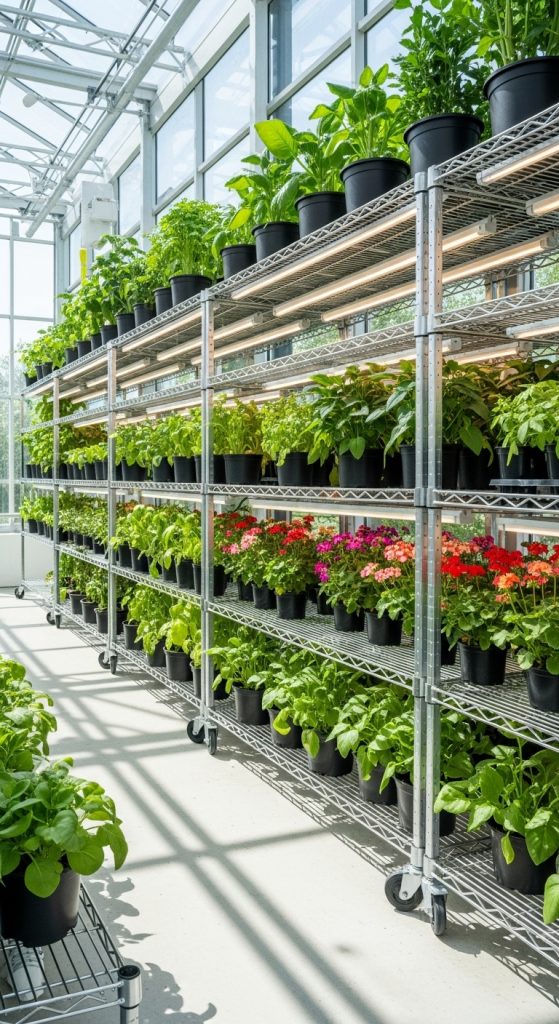
1. Sturdy Metal Wire Shelving
Metal wire shelving is one of the most practical and durable choices for greenhouse organization. Made from coated steel or stainless steel, these shelves resist rust and support heavy pots and trays. Preparation involves measuring the available space and ensuring the floor can handle the shelf’s weight load. Select adjustable metal racks that allow flexibility as plant heights change. Metal wire shelves are ideal for providing airflow and light penetration since their open design prevents moisture buildup and mold growth. To maintain cleanliness, wipe surfaces regularly and check for corrosion. They can be arranged in rows or along walls depending on greenhouse layout. For added stability, secure taller units to the wall or frame. This option is perfect for gardeners who need reliable, long-lasting storage for large plants, tools, and soil containers.
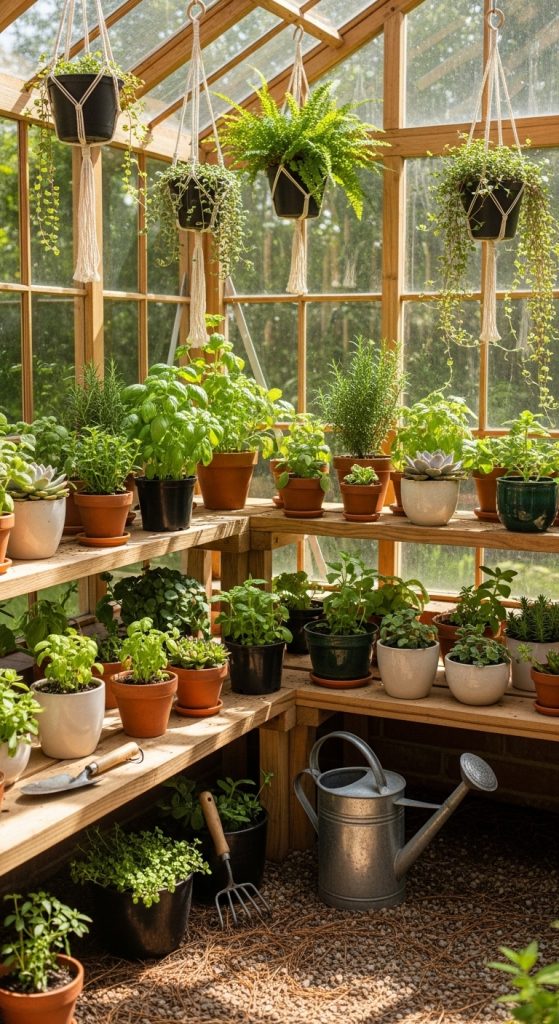
2. Wooden Slatted Shelving
Wooden slatted shelves bring a natural, rustic aesthetic to the greenhouse while maintaining functionality. Cedar, teak, or treated pine are popular wood types because they resist rot and moisture. Before installation, sand and seal the wood using non-toxic, water-resistant finishes to extend its lifespan. The slatted design allows proper air circulation and prevents water from pooling. You can build these shelves yourself or buy pre-assembled units. They can be customized to fit any corner or wall length. Wooden shelves work beautifully for displaying decorative pots or growing herbs and flowers. However, they require periodic maintenance to prevent warping or mold growth. Adding caster wheels to lower shelves can enhance mobility for cleaning or rearranging. This shelving style combines traditional charm with practical organization, ideal for plant lovers who value natural materials and handcrafted appeal.
3. Multi-Tier Plastic Shelving Units
Plastic shelving units are lightweight, budget-friendly, and moisture-resistant, making them great for greenhouse environments. To prepare, choose heavy-duty plastic that can hold the weight of multiple pots. Assembly is easy, typically involving interlocking shelves and poles without the need for tools. Plastic shelves are ideal for beginners or small greenhouses where easy mobility is essential. Their non-corrosive surface withstands humidity and direct water contact. Use them for seed trays, small potted plants, or garden tools. They are easy to clean—simply hose them down or wipe with a damp cloth. Plastic shelving also comes in various colors and styles, allowing you to match your greenhouse decor. The downside is that they may not support heavy clay pots, but for lightweight items, they are an excellent, low-maintenance option. Perfect for gardeners looking for versatility and simplicity.
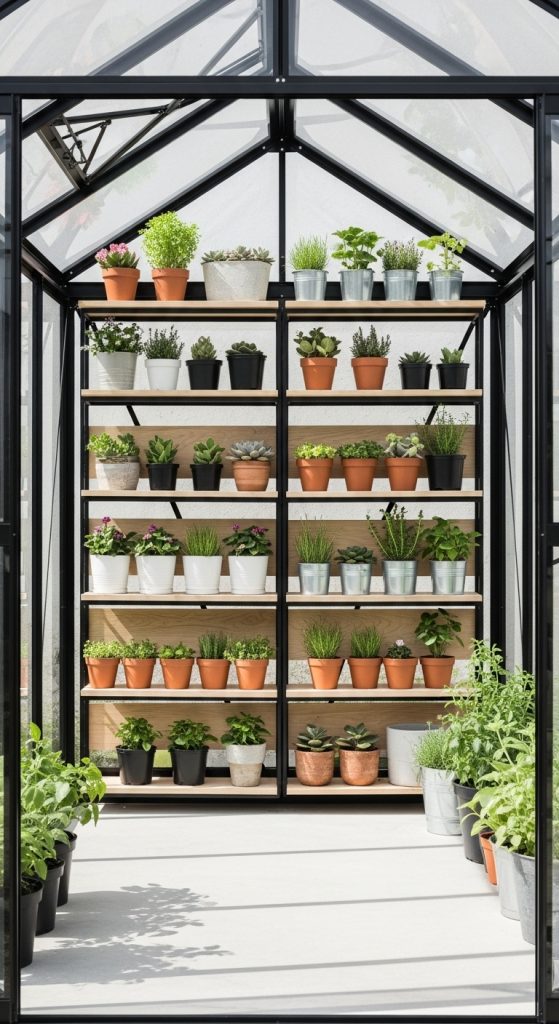
4. Adjustable Aluminum Shelving
Aluminum shelving combines lightweight design with impressive strength, making it perfect for both hobby and professional greenhouses. Aluminum resists rust and corrosion, even in humid conditions. Preparation involves measuring your wall space and ensuring the shelves can be secured firmly. Many adjustable systems feature modular brackets that can be repositioned to accommodate various plant sizes. The sleek, metallic look also complements modern greenhouse designs. These shelves are easy to clean and maintain, requiring only periodic wiping to remove dirt. Aluminum shelving can be paired with wire or slatted inserts to improve air circulation. Because of its strength-to-weight ratio, it is ideal for supporting multiple heavy pots without bending. The material’s durability ensures it lasts for years without deterioration. Adjustable aluminum shelving is the go-to option for serious plant enthusiasts who want flexibility, efficiency, and modern appeal.
5. Hanging Shelves and Tiered Racks
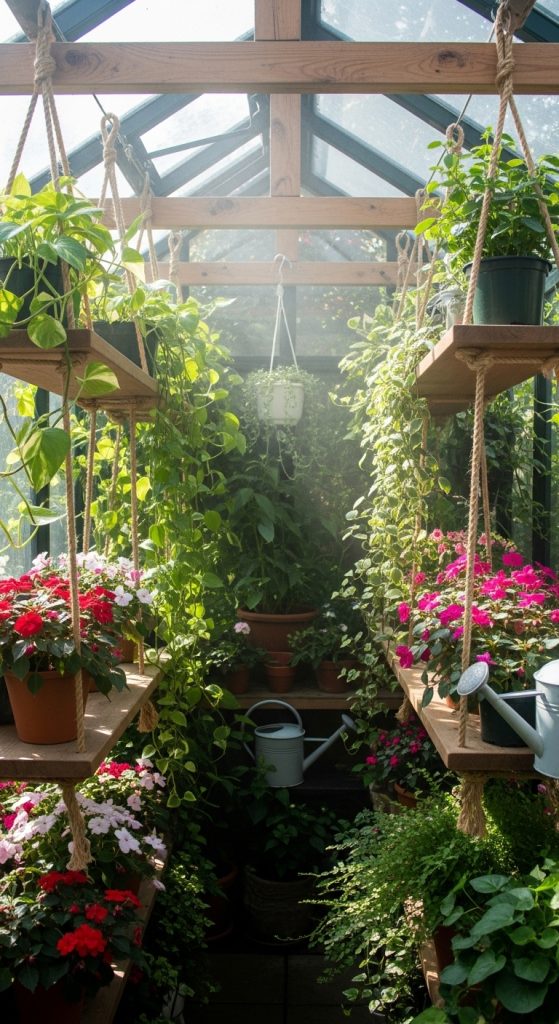
Hanging shelves make excellent use of vertical space in smaller greenhouses. They allow plants to receive equal light exposure and free up floor area for larger pots or walking space. Preparation involves checking the greenhouse ceiling or frame for structural strength before installation. Use durable chains, hooks, or metal cables to hang the shelves securely. Materials such as wire mesh, lightweight wood, or plastic trays work well for hanging racks. Tiered hanging designs are ideal for herbs, succulents, and seedlings. They promote air circulation and can even double as decorative displays. It is essential to ensure weight distribution is balanced to avoid strain on greenhouse supports. Hanging shelves add visual depth and functionality, making the space feel organized and airy. They are perfect for plant lovers seeking a creative and space-efficient solution that emphasizes accessibility and style.
6. Corner Shelving Systems
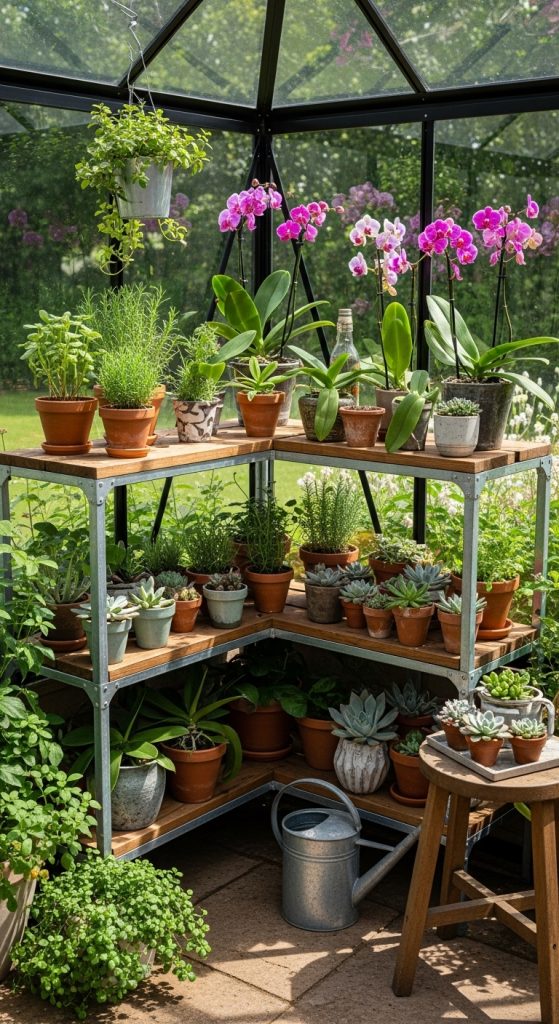
Corner shelving systems maximize every inch of greenhouse space, turning unused corners into productive areas. These shelves can be custom-built or modular, depending on your greenhouse layout. Preparation begins with measuring the corner dimensions to ensure proper fit. Materials like powder-coated metal, aluminum, or waterproof wood work well in humid environments. Corner shelves are ideal for smaller plants, seedlings, or gardening accessories. You can design them in triangular or curved shapes to suit the space. Their compact structure ensures no corner is wasted while maintaining open pathways for easy movement. These shelves also improve light distribution by positioning plants at various heights. Maintenance involves occasional cleaning and ensuring stability. Corner shelving systems provide both practicality and design balance, perfect for plant enthusiasts who value efficiency and organization in their greenhouse setup.
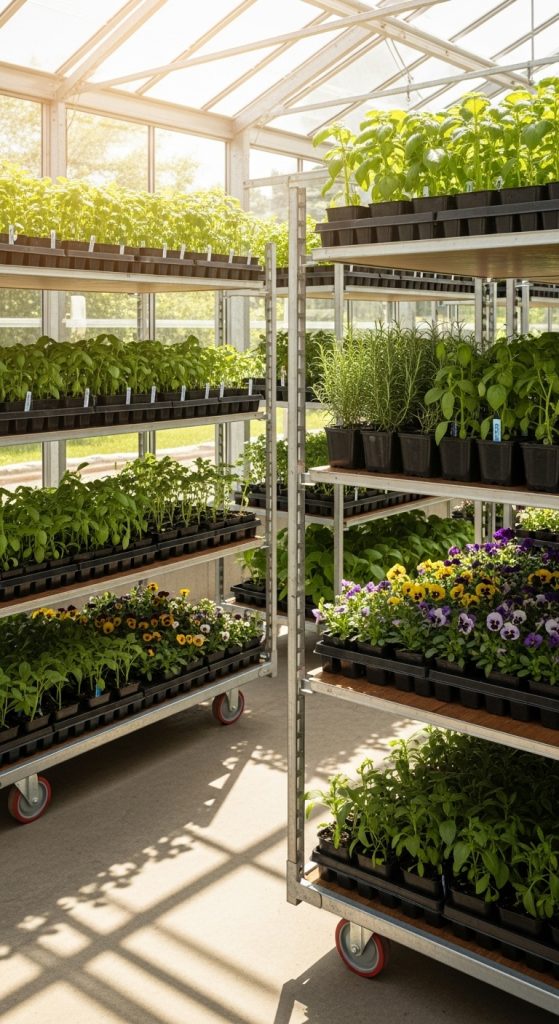
7. Rolling Cart Shelves
Rolling cart shelves provide mobility and flexibility, allowing you to move plants according to light needs or seasonal changes. These shelves typically feature multiple tiers and locking wheels for stability. Preparation involves choosing carts made of rust-resistant materials such as aluminum or coated steel. Each tier can be customized with wire or mesh inserts to improve drainage. Rolling carts are ideal for greenhouses that double as workspaces, as they can transport seedlings, soil, or tools easily. When not in use, they can be stored in corners or used as temporary display units. Maintenance is minimal, requiring only wheel lubrication and regular cleaning. They come in various heights and widths to suit different needs. Rolling cart shelves are excellent for dynamic greenhouse setups, giving plant lovers the convenience of movement and efficient organization.
8. Wall-Mounted Shelving
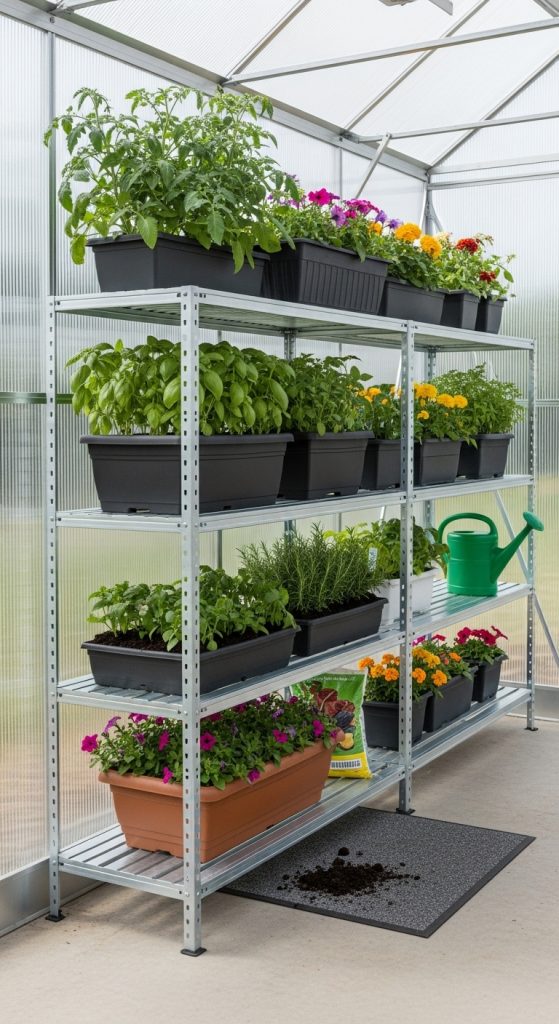
Wall-mounted shelves help save floor space and create a clean, vertical growing area. Preparation includes ensuring that the greenhouse wall or frame can support the weight of the shelves and potted plants. Use brackets made from galvanized steel or aluminum for strength. Shelves can be wooden planks, metal grates, or recycled materials treated for moisture resistance. Arrange them at staggered heights to maximize sunlight exposure for all plants. Wall-mounted shelving works best for herbs, seedlings, or hanging pots. It also allows easy access to watering and pruning. Adding hooks beneath the shelves can provide extra space for hanging tools or small baskets. Maintenance involves checking for rust or loosened brackets periodically. Wall-mounted shelving adds structure, organization, and style, making it perfect for plant lovers who want to maintain a neat and efficient greenhouse layout.
9. Bench-Style Shelving
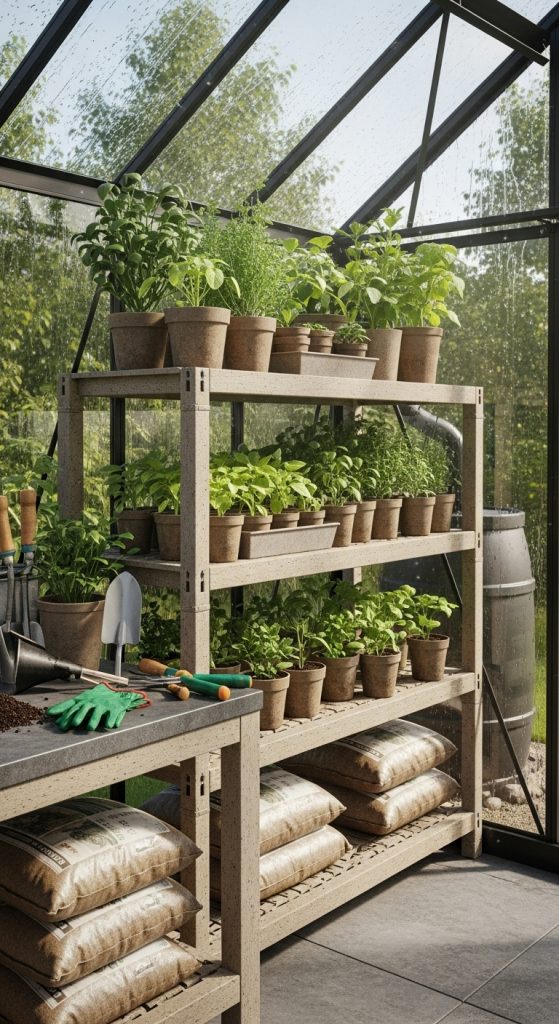
Bench-style shelving offers a versatile and practical setup for greenhouse workspaces. These wide, waist-high shelves double as planting benches and display areas. Preparation begins by determining the desired height for comfortable access while standing or sitting. Construct benches from galvanized steel, aluminum, or treated wood with slatted tops to allow drainage. This type of shelving provides a stable surface for potting, trimming, and arranging plants. The open space beneath can store soil bags, trays, or watering cans. Benches can be placed along the length of the greenhouse for efficient use of space. Maintenance includes keeping surfaces clean and ensuring the structure remains level. Bench-style shelving combines functionality and comfort, ideal for gardeners who spend long hours working with plants and need both storage and workspace in one cohesive design.
10. Recycled and DIY Shelving
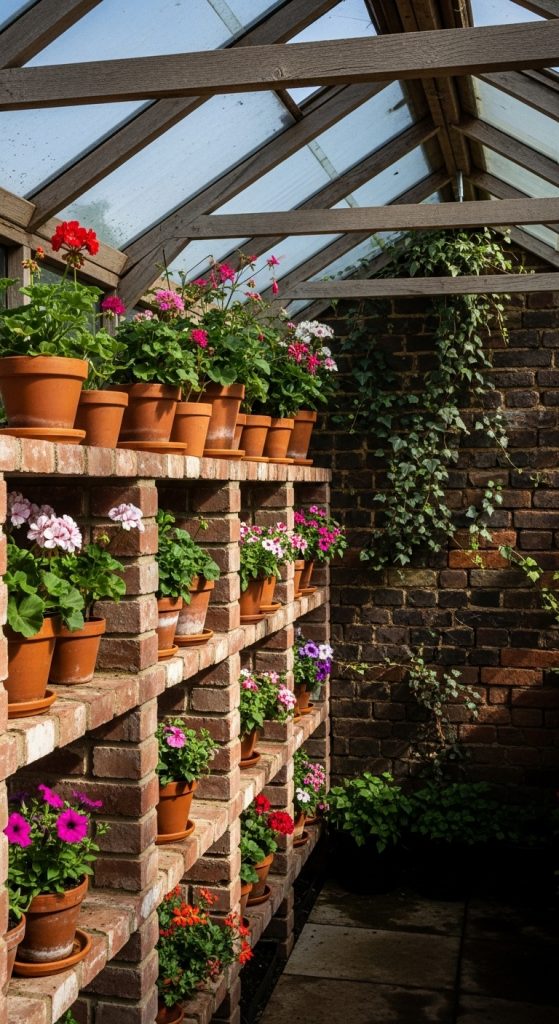
For environmentally conscious plant lovers, recycled and DIY shelving solutions offer creativity and sustainability. Repurposing materials like old ladders, wooden crates, pallets, or metal frames can produce unique and cost-effective shelves. Preparation involves cleaning and treating materials to resist moisture and decay. You can customize sizes and heights based on your greenhouse layout. For example, a repurposed ladder can serve as a tiered plant stand, while stacked crates create modular shelves. Add protective coatings or sealants to ensure longevity. DIY shelving allows complete control over design aesthetics and functionality. It is ideal for gardeners who enjoy hands-on projects and want to reduce waste. Maintenance depends on the materials used but generally includes regular cleaning and reinforcement of joints. Recycled shelving adds character, resourcefulness, and charm to any greenhouse space.
About Me

Chesung Subba
Author/Writer
Hello, I'm Chesung Subba, a passionate writer who loves sharing ideas, stories, and experiences to inspire, inform, and connect with readers through meaningful content.
Follow Me
Connect with me and be part of my social media community.
Leave a Reply