
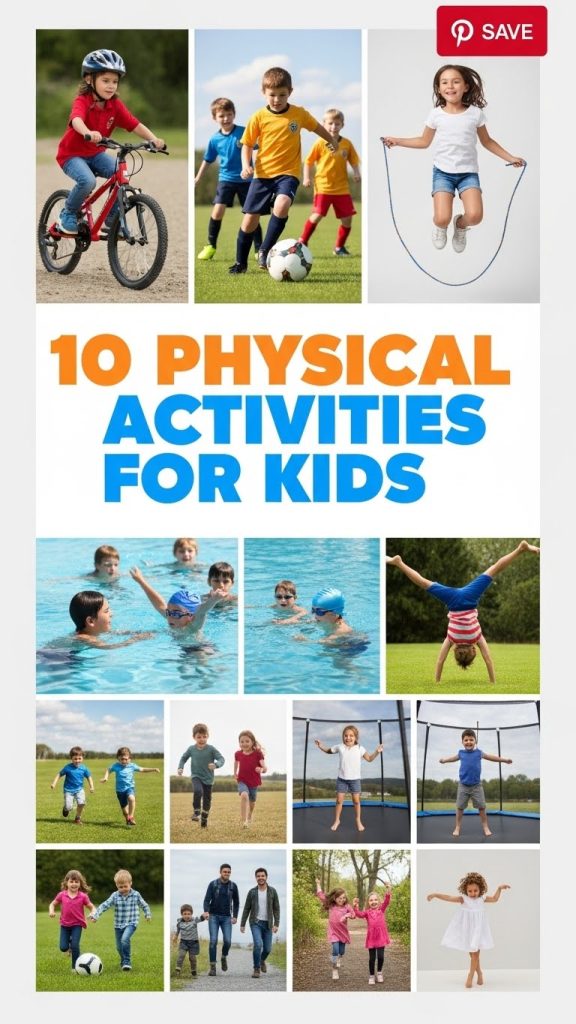
10 Physical activities for kids

Physical activities play a crucial role in a child’s development. They improve strength, coordination, social skills, and overall health. With increasing screen time, encouraging kids to engage in fun physical activities is essential for a balanced lifestyle. Here are ten effective physical activities for kids, complete with preparation guidelines and tips for maximizing safety and enjoyment.
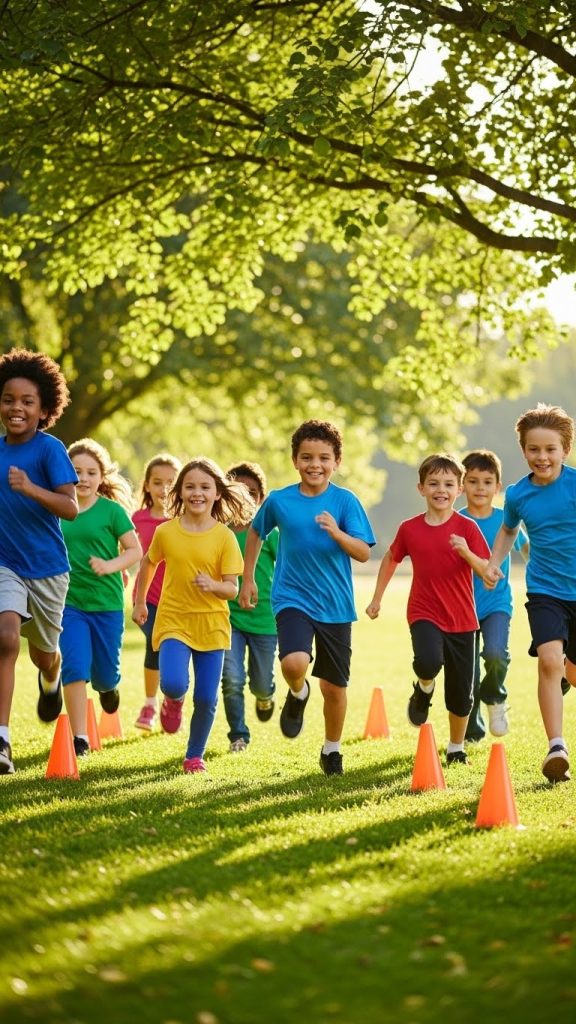
1. Outdoor Running and Sprinting Games
Running is one of the simplest yet most effective ways to enhance cardiovascular fitness and overall stamina in children. Organizing sprinting games or relay races can make this activity highly engaging. Children learn the basics of teamwork, speed, and coordination while having fun. Simple games like tag or obstacle races encourage kids to run in short bursts, which improves endurance and muscle development.
Materials Needed: Open space such as a backyard, park, or playground; cones or markers to define running lanes; stopwatch for timing races.
Preparation: Ensure the running area is safe and free from sharp objects or uneven surfaces. Dress children in comfortable clothing and supportive footwear. Warm-up exercises such as light jogging or stretching are essential to prevent injuries. For younger children, introduce short distances and gradually increase the intensity as they build stamina.
Tips: Encourage children to set personal goals and track their progress. Sprinting games can be adapted for indoors in a safe, open area with soft flooring. Incorporating fun challenges such as zigzag running or balancing while running keeps the activity stimulating and helps develop coordination and agility.
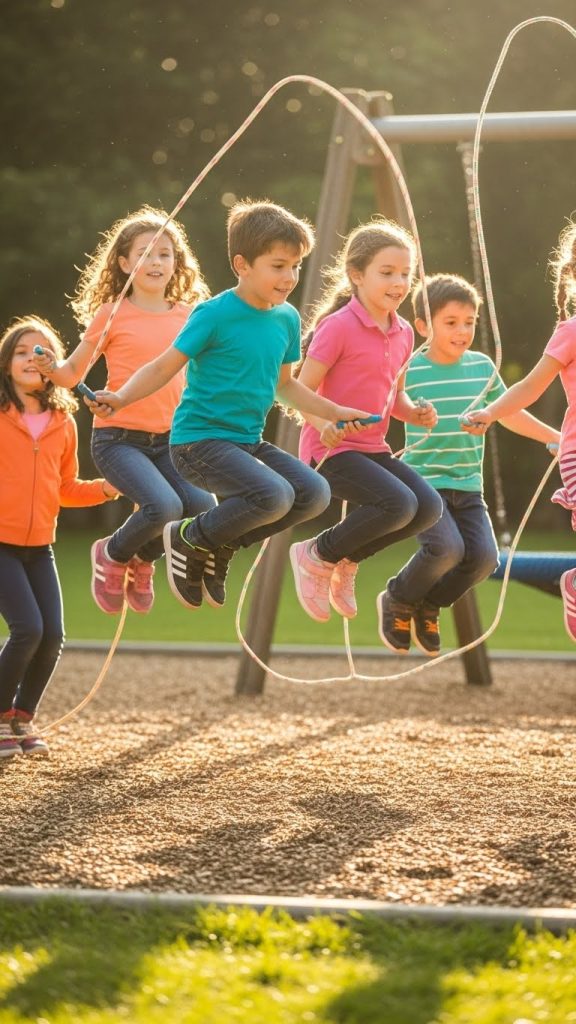
2. Jump Rope Exercises
Jump rope exercises are excellent for enhancing cardiovascular health, coordination, and rhythm in children. This activity improves leg strength, agility, and hand-eye coordination while keeping children engaged. Jump rope routines can be adapted to different skill levels, from simple single jumps to advanced patterns like double unders.
Materials Needed: Durable jump rope, comfortable sports shoes, open space.
Preparation: Select a jump rope suitable for the child’s height; standing on the middle of the rope and pulling handles to the armpits is the correct length. Clear the area to prevent tripping. Begin with warm-up stretches targeting the legs, wrists, and shoulders.
Tips: Introduce short sessions initially, gradually increasing duration and complexity. Incorporating counting or rhythmic music can make jumping rope more enjoyable. Encourage creative games such as “longest jump streak” or “team jumping” to maintain motivation. Jump rope is also portable, making it an ideal physical activity for both indoor and outdoor settings, and it promotes social interaction when children take turns or compete in friendly challenges.
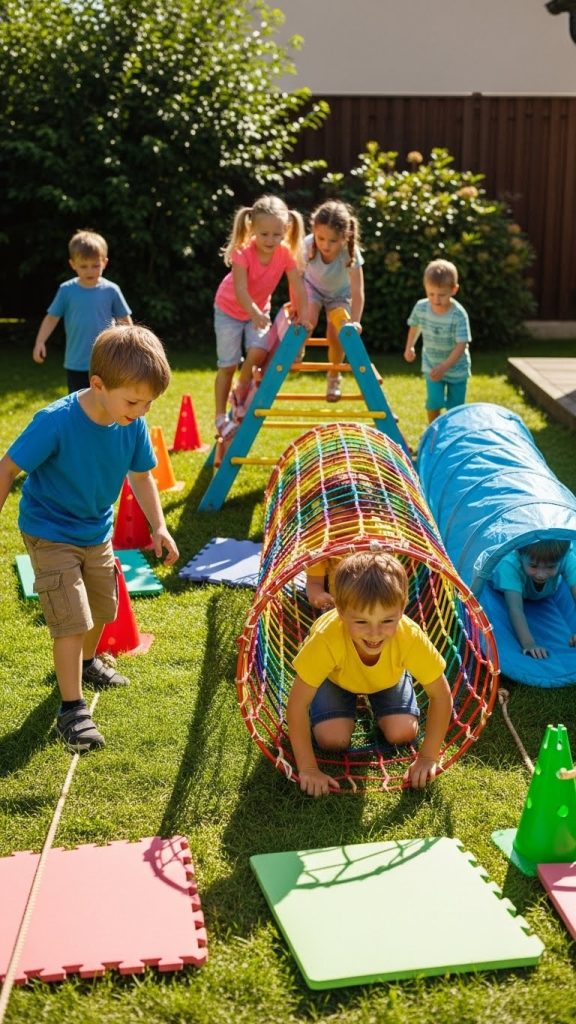
3. Obstacle Courses
Obstacle courses provide a multi-dimensional physical challenge for children, combining running, crawling, jumping, and balancing. These courses improve strength, agility, and problem-solving skills while keeping children engaged in playful learning. They can be easily customized to suit age and skill levels, allowing children to progress gradually.
Materials Needed: Cones, ropes, chairs, mats, tunnels, and any safe household items that can serve as obstacles.
Preparation: Arrange obstacles in a clear, spacious area, ensuring there are no sharp edges or hazardous objects. Explain the course layout and demonstrate each challenge. Use mats to cushion landings and reduce the risk of injury.
Tips: Encourage children to complete the course in different ways to develop creativity and problem-solving. Time-based challenges or team competitions enhance excitement and motivation. Rotate obstacles regularly to maintain interest and challenge coordination, balance, and stamina. Obstacle courses are highly versatile and suitable for both indoor and outdoor play, making them an excellent activity for rainy or sunny days.
4. Ball Games
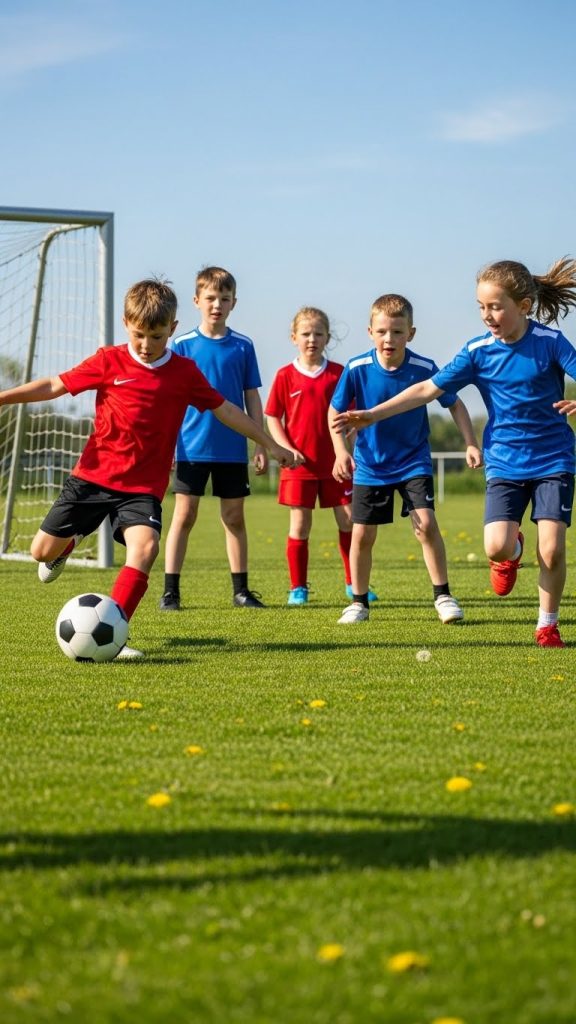
Ball games such as soccer, basketball, and catch improve hand-eye coordination, balance, and motor skills. These activities foster teamwork, strategic thinking, and social interaction while providing substantial physical exercise. Children learn to coordinate movements, react quickly, and develop both gross and fine motor skills.
Materials Needed: Appropriate balls (soccer, basketball, or soft catch balls), goalposts or hoops, open space, and optional cones for marking boundaries.
Preparation: Select a game suitable for the child’s age and skill level. Ensure the playing area is safe, with even surfaces and no obstacles. Teach basic rules and techniques to prevent injuries. Warm-up exercises such as light jogging and stretching help prepare muscles.
Tips: Adapt the game rules to simplify gameplay and encourage participation. Small-sided games are effective for maintaining focus and involvement. Regularly rotating different ball games keeps children interested while targeting different muscle groups. Ball games are not only physical but also cognitive, as children learn to anticipate movements and make quick decisions during play.
5. Cycling
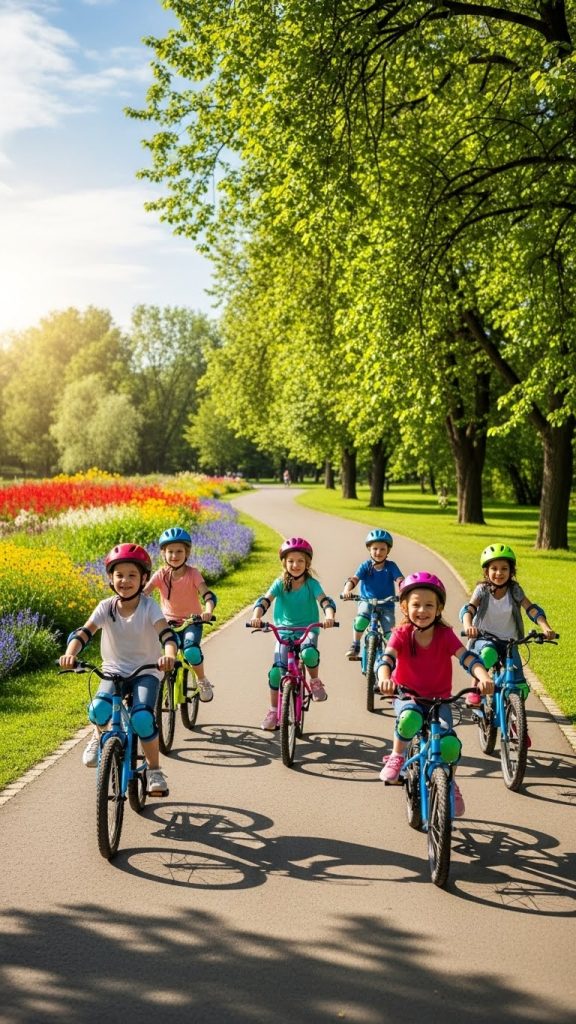
Cycling is an effective aerobic activity that enhances leg strength, balance, and cardiovascular health. It also builds confidence and provides children with a sense of independence. Riding a bike outdoors exposes children to fresh air and can be a social activity when done with peers or family.
Materials Needed: Age-appropriate bicycle, helmet, knee and elbow pads, open safe space or bike trail.
Preparation: Ensure the bike is the correct size and properly maintained. Children should wear protective gear, including helmets, to prevent injuries. Teach basic cycling rules and safety measures such as signaling turns and checking surroundings.
Tips: Start with short distances and gradually increase the duration as skills improve. Introduce games like “follow the leader” or timed races to make cycling more engaging. Encourage group cycling to foster social interaction. Cycling also helps children develop spatial awareness and endurance while providing a fun and eco-friendly outdoor activity.
6. Swimming
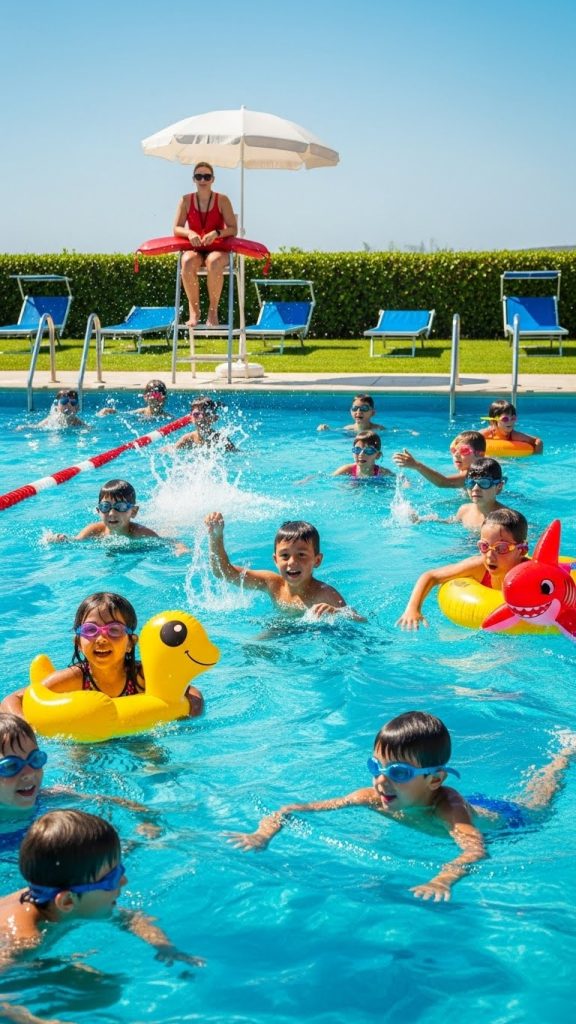
Swimming is a full-body exercise that promotes cardiovascular fitness, muscular strength, and coordination. It is also an essential life skill and provides children with water safety knowledge. Swimming can be adapted to various skill levels, from basic floating to advanced strokes, making it suitable for a wide age range.
Materials Needed: Swimming pool, swimwear, swimming goggles, flotation devices for beginners.
Preparation: Ensure a safe swimming environment with adult supervision at all times. Start with basic water acclimatization exercises for beginners. Provide flotation aids if necessary and gradually introduce swimming techniques.
Tips: Encourage structured swimming lessons combined with free play. Introduce games like relay races or water tag to maintain engagement. Swimming improves respiratory capacity, coordination, and overall fitness while providing a low-impact alternative to land-based activities. It is particularly beneficial for children with joint or mobility concerns due to its low-impact nature.
7. Dancing
Dancing is a fun way for children to express themselves while improving cardiovascular fitness, flexibility, and coordination. It encourages creativity, rhythm, and self-confidence. Structured dance classes or free-form dancing at home can both be effective methods of engaging children in physical activity.
Materials Needed: Open space, music player or speaker, comfortable clothing and shoes.
Preparation: Choose music suitable for the child’s age and preferences. Ensure the area is free of obstacles to prevent injuries. Begin with warm-up stretches targeting the legs, arms, and back.
Tips: Encourage children to create their own dance moves or follow structured routines. Dance competitions, virtual dance classes, or group activities can enhance social skills and motivation. Regular dancing also improves posture, balance, and overall physical health. Incorporating different dance styles exposes children to cultural variety and keeps the activity exciting.

8. Yoga for Kids
Yoga promotes flexibility, balance, strength, and mental focus. Practicing yoga helps children develop body awareness and relaxation techniques, which are beneficial for emotional regulation. It is a gentle activity suitable for children of all ages and can be combined with playful movements and stories to maintain engagement.
Materials Needed: Yoga mat, comfortable clothing, optional yoga blocks or cushions.
Preparation: Create a quiet and safe space for practice. Begin with basic poses such as cat-cow, tree pose, or downward dog. Introduce breathing exercises and simple sequences that are easy to follow.
Tips: Incorporate storytelling and imagination into poses to make sessions fun. Practice yoga in short sessions, gradually increasing duration as children become comfortable. Encourage participation rather than perfection to avoid frustration. Yoga can also be paired with mindfulness activities to promote mental well-being and focus alongside physical fitness.

9. Hiking and Nature Walks
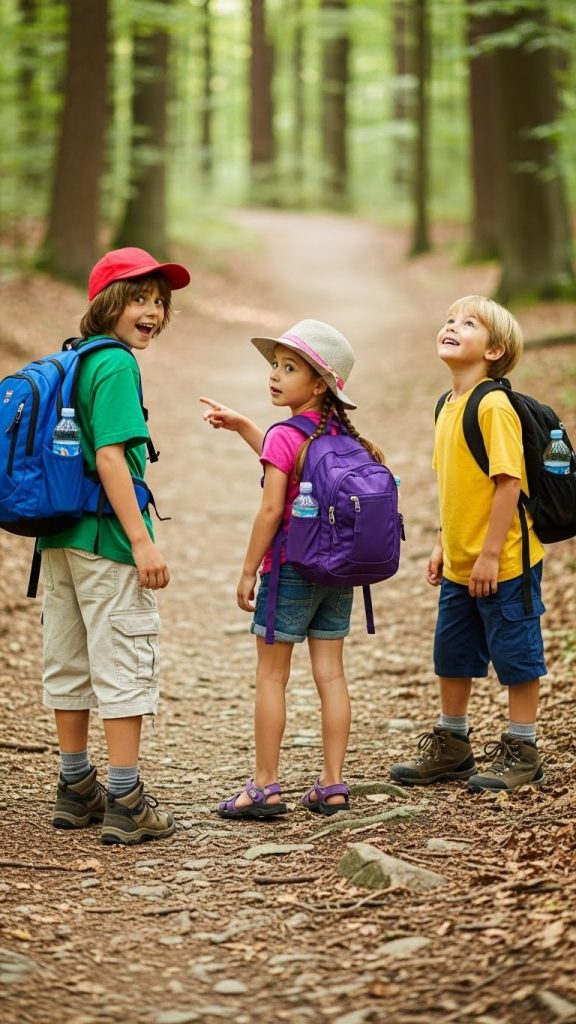
Hiking and nature walks provide excellent cardiovascular exercise while exposing children to outdoor environments. These activities improve endurance, strength, balance, and appreciation for nature. Exploring trails or parks can be educational, offering opportunities to learn about plants, animals, and the environment.
Materials Needed: Comfortable footwear, water bottles, backpack with snacks, weather-appropriate clothing.
Preparation: Select a trail suitable for the child’s age and stamina. Plan the route and duration in advance. Pack necessary supplies such as water, first aid, and healthy snacks. Teach basic hiking safety rules, including staying on marked trails and respecting wildlife.
Tips: Make hikes engaging by incorporating games such as scavenger hunts or nature photography. Gradually increase the distance and difficulty level as children gain confidence. Encourage children to observe their surroundings, enhancing both physical activity and cognitive skills. Hiking promotes endurance, leg strength, and mental resilience in a natural and stimulating environment.
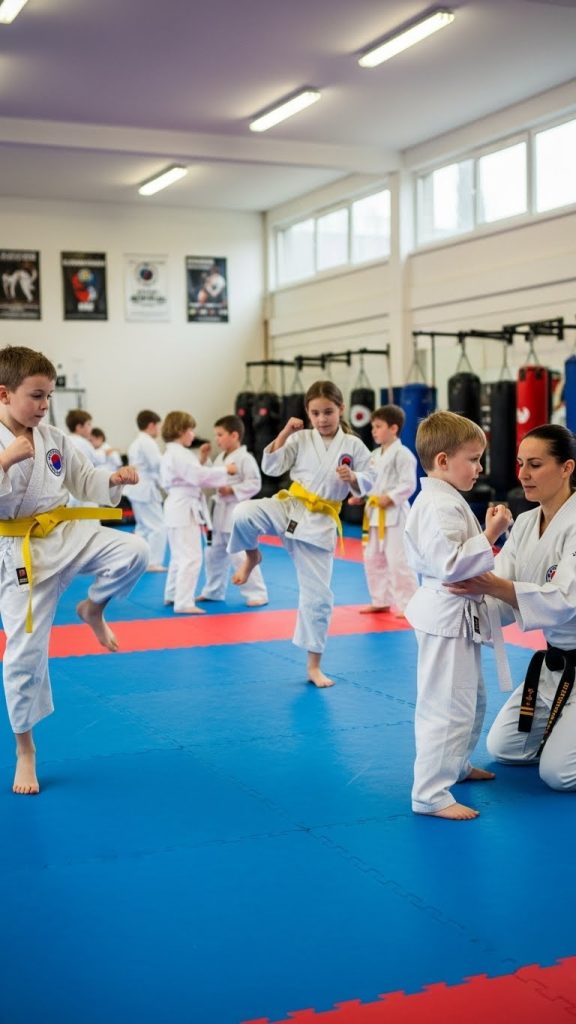
10. Martial Arts and Self-Defense Classes
Martial arts improve strength, flexibility, coordination, and discipline in children. They provide structured physical activity while teaching self-defense, focus, and confidence. Different styles such as karate, taekwondo, or judo can be chosen based on the child’s interest and age.
Materials Needed: Martial arts uniform, protective gear, safe training area, qualified instructor.
Preparation: Select a reputable martial arts school or instructor. Ensure children have appropriate uniforms and safety equipment. Begin with basic warm-up exercises, stretching, and simple techniques. Emphasize safety and respect for instructors and peers.
Tips: Martial arts classes should focus on gradual skill development and self-confidence rather than competition alone. Encourage consistent practice while incorporating fun drills and games. Martial arts promote discipline, focus, balance, and physical fitness while fostering a sense of achievement and self-respect.
About Me

Chesung Subba
Author/Writer
Hello, I'm Chesung Subba, a passionate writer who loves sharing ideas, stories, and experiences to inspire, inform, and connect with readers through meaningful content.
Follow Me
Connect with me and be part of my social media community.
Leave a Reply