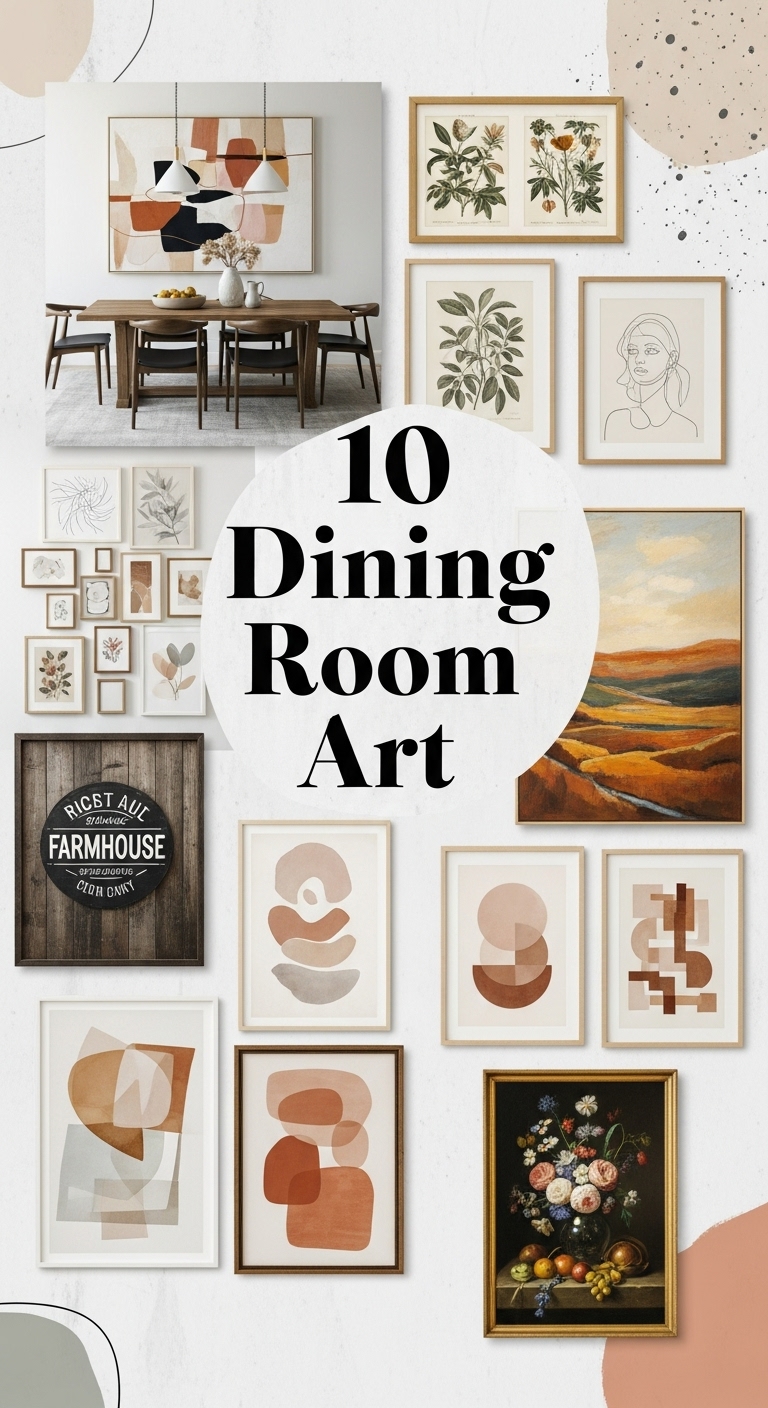
10 Dining Room Art

The dining room is more than just a place to share meals. It is often the hub of family conversations, festive gatherings, and memorable celebrations. While furniture and lighting play a major role in shaping the room, the art on your walls can be equally transformative. Art adds personality, sets the mood, and creates a focal point that can turn an ordinary dining space into something extraordinary.
Choosing the right art for your dining room can feel overwhelming, but it does not have to be. By exploring different themes and styles, you can find art that complements your decor, reflects your personality, and enhances the dining experience. In this article, we will explore ten dining room art ideas that can inspire you to curate a space that feels stylish, warm, and inviting.

1. Oversized Statement Art
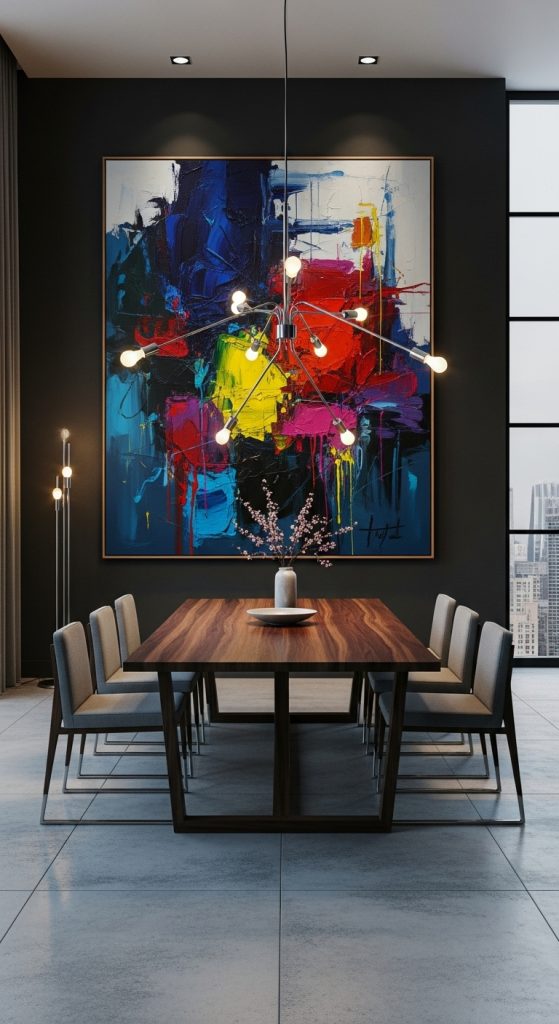
One of the boldest approaches to dining room art is choosing a single oversized piece to serve as the focal point. This could be a large abstract painting, a dramatic photograph, or even a textured canvas. The scale alone makes it a conversation starter and immediately draws the eye when guests enter the room.
Oversized art works particularly well in minimalist spaces or dining rooms with simple furniture. By keeping the rest of the decor understated, the artwork can shine. A large abstract piece with bold colors can energize the room, while a monochrome canvas can add sophistication and calm.
When hanging oversized art, placement is crucial. It should be centered either above the dining table or on the largest wall of the room. Proper lighting enhances the impact, ensuring the piece is visible and appreciated both day and night.
2. Gallery Wall
A gallery wall brings variety and personality into the dining room. Instead of relying on a single piece, this approach uses multiple artworks arranged together to create a cohesive display. The pieces might be photographs, paintings, prints, or even a mix of media.
The key to a successful gallery wall is balance. You can use frames of different sizes for an eclectic look or keep them uniform for a more polished style. The subject matter can be consistent, such as all black and white photography, or varied, like a mix of abstract art and family portraits.
Gallery walls work well in both small and large dining rooms. They allow you to showcase multiple interests and memories, creating a wall that tells a story. It is also an approach that can grow over time, with new pieces added to the collection.

3. Abstract Paintings
Abstract art offers endless possibilities for dining room decor. With its bold shapes, colors, and textures, abstract art can make a dining space feel modern and dynamic. It is versatile enough to complement a variety of interior styles, from contemporary to eclectic.
A vibrant abstract painting can add energy and excitement, making the dining experience feel lively. On the other hand, a muted abstract piece with soft tones can create a calming environment. The key is to choose artwork that aligns with the mood you want for your dining room.
Abstract paintings also encourage interpretation and conversation. Each viewer may see something different in the piece, which makes them excellent icebreakers during social gatherings.

4. Black and White Photography
Black and white photography has a timeless appeal. Its simplicity and contrast make it a sophisticated choice for dining room art. Whether it is portraits, landscapes, or architectural images, black and white photography brings elegance and depth to the space.
Large framed prints can serve as focal points, while a series of smaller photographs arranged in a row can create rhythm and continuity. Choosing iconic images, personal family photos, or even vintage prints adds character and emotional connection to the dining room.
Black and white photography works well with both modern and traditional interiors. It blends easily with different color palettes and often becomes the quiet anchor that ties the entire room together.

5. Botanical Prints
Botanical prints bring nature indoors. Whether vintage illustrations of plants or modern artistic interpretations of leaves and flowers, they create a fresh and inviting atmosphere in the dining room.
Botanical art is versatile. A set of framed botanical illustrations can bring a traditional feel, while oversized modern prints with bold leaf designs can make the space feel contemporary. They also pair beautifully with natural elements such as wooden tables, rattan chairs, or greenery placed around the room.
Botanical prints are particularly effective in dining rooms that receive plenty of natural light. They emphasize freshness and growth, making the space feel lively and connected to nature.

6. Mirrors as Art
Mirrors are functional, but they can also be used as artistic elements. A large decorative mirror or a collection of smaller mirrors can transform the dining room. Beyond reflecting light and making the room feel larger, mirrors add elegance and style.
Ornate framed mirrors create a traditional, luxurious look, while frameless or geometric shaped mirrors provide a modern edge. Grouping mirrors together can mimic the feel of a gallery wall but with reflective surfaces that add depth.
Placing a mirror opposite a window allows natural light to bounce around the room, enhancing brightness during the day. At night, mirrors reflect the glow of candles or chandeliers, creating a warm, atmospheric effect.

7. Sculptural Wall Art
Not all art needs to be two dimensional. Sculptural wall art adds depth and dimension, making the dining room walls more dynamic. These pieces might be made of metal, wood, ceramic, or mixed materials.
Metal wall sculptures in abstract designs add a contemporary flair, while carved wooden panels bring warmth and texture. Three dimensional pieces create shadows and movement, giving the wall a sense of life.
Sculptural wall art works especially well in dining rooms with high ceilings or large empty walls. It can serve as a striking focal point and balance the flat surfaces of tables and chairs with added texture.

8. Cultural and Travel Inspired Art
Art inspired by culture and travel can make your dining room feel personal and globally connected. This could include textiles from different regions, hand painted ceramics, or artwork collected during trips.
Displaying cultural art is a way to share stories and memories. For example, a Moroccan tapestry, a Japanese woodblock print, or an African mask can all add character and authenticity to the dining space. When arranged thoughtfully, these pieces become conversation starters that reflect your personal journey.
Cultural art also brings richness through color, texture, and pattern. It celebrates diversity and adds depth to the dining room aesthetic.

9. Minimalist Line Art
Minimalist line art has grown in popularity for its simplicity and elegance. These artworks often feature clean, continuous lines that form shapes, faces, or abstract figures. Despite their simplicity, they carry emotional impact and visual intrigue.
Framed line drawings in black and white work beautifully in modern dining rooms. Larger prints can make a bold statement, while smaller pieces grouped together create harmony. Line art complements neutral color schemes and minimalist interiors, adding just the right amount of visual interest without overwhelming the space.
Minimalist art also keeps the dining room feeling calm and uncluttered, which is ideal for a relaxing dining experience.

10. Rotating or Seasonal Art Displays
For those who love variety, a rotating art display keeps the dining room fresh and dynamic. This approach allows you to swap out artwork with the changing seasons, holidays, or personal moods.
In spring, you might showcase floral or pastel themed art. In summer, bright abstract pieces can bring vibrancy. Autumn might feature warm toned photography, while winter could highlight cozy landscapes or festive art.
Rotating art ensures that the dining room never feels static. It also provides flexibility for experimenting with different themes and styles without long term commitment. Using simple frame systems or shelves designed for art makes switching pieces easy and enjoyable.

Tags: 10 Dining Room Art
About Me

Chesung Subba
Author/Writer
Hello, I'm Chesung Subba, a passionate writer who loves sharing ideas, stories, and experiences to inspire, inform, and connect with readers through meaningful content.
Follow Me
Connect with me and be part of my social media community.
Leave a Reply