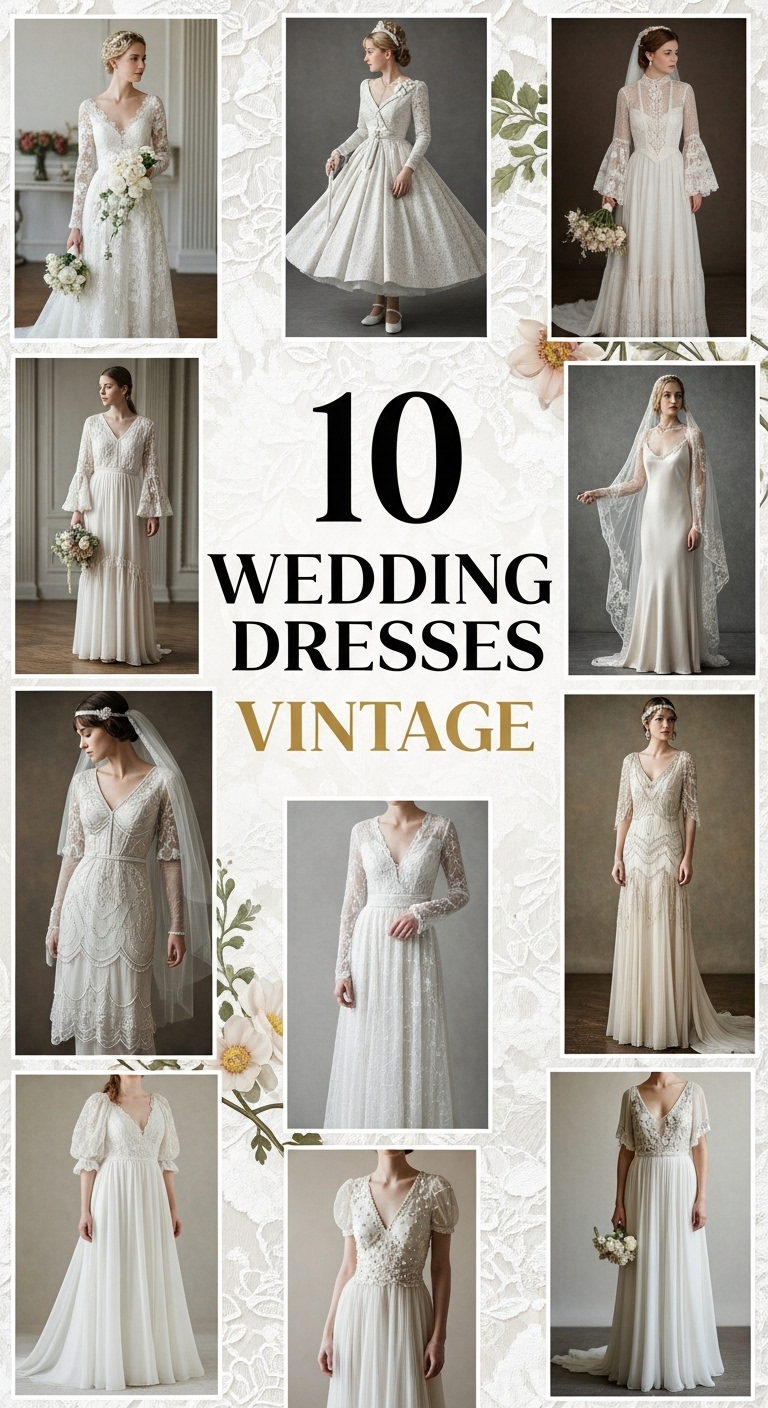
10 Wedding Dresses Vintage

Wedding dresses have always been more than just garments; they are reflections of culture, personal style, and timeless beauty. For many brides, a vintage wedding dress offers the chance to connect with history while showcasing individuality and elegance. Whether it is the intricate lace of the early 1900s, the glamorous beading of the 1920s, or the romantic silhouettes of the mid twentieth century, vintage wedding dresses capture charm and sophistication that transcend trends.
A vintage wedding gown does not necessarily mean wearing an old dress; many modern designers take inspiration from the past and reinterpret styles with contemporary fabrics and tailoring. Brides who choose vintage or vintage inspired gowns are often looking for something unique, timeless, and rich in character.
In this article, we will explore 10 styles of vintage wedding dresses, each inspired by a specific era or design tradition.

1. Edwardian Inspired Lace Gown
Edwardian fashion from the early 1900s emphasized delicate femininity and graceful lines. Wedding dresses from this era often featured high collars, long sleeves, and intricate lace overlays. These gowns were modest yet detailed, showcasing the beauty of craftsmanship.
An Edwardian inspired gown is perfect for brides who want a romantic and regal look. Pairing the dress with a cathedral length veil or lace gloves enhances the authenticity of the style.

2. 1920s Flapper Style Dress
The 1920s brought a revolution in fashion, and bridal gowns reflected this transformation. Flapper inspired wedding dresses often included dropped waists, beaded fringe, sequins, and shorter hemlines compared to earlier decades.
These dresses are glamorous and fun, ideal for brides who want to embrace the spirit of the Jazz Age. Paired with a feathered headpiece or art deco jewelry, a 1920s gown becomes a statement of confidence and individuality.

3. 1930s Satin Bias Cut Dress
The 1930s emphasized sleek sophistication, and the satin bias cut gown was a hallmark of bridal fashion. These dresses were often simple in design but luxurious in execution, with fabric that draped elegantly over the body.
Slim silhouettes and cowl necklines were common, giving brides a graceful and statuesque appearance. A 1930s inspired gown is timeless and works beautifully for minimalist brides who still want a touch of vintage glamour.

4. 1940s Modest and Structured Dress
Wedding fashion during the 1940s reflected wartime sensibilities, with simpler designs and practical details. Dresses often had structured shoulders, modest necklines, and tea length skirts. Fabrics were less elaborate due to rationing, but the simplicity created elegance.
A 1940s inspired gown with subtle embroidery or small buttons can be a charming choice for brides who value understated beauty and tradition. Paired with a vintage hair veil or floral crown, this style feels both historical and personal.
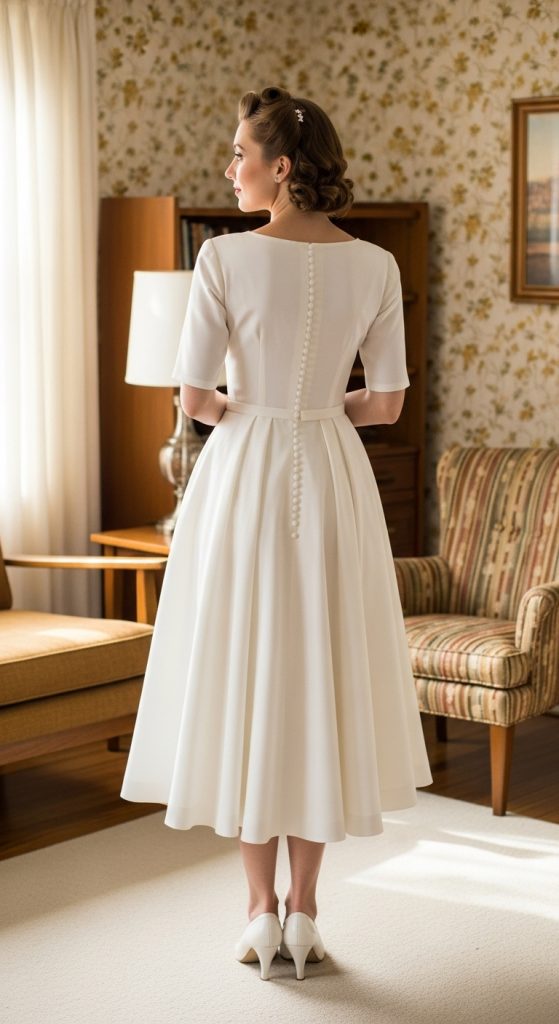
5. 1950s Tea Length Dress
The 1950s marked the rise of feminine silhouettes with full skirts, cinched waists, and playful tea length hemlines. This era popularized shorter wedding dresses that allowed brides to dance with ease while still looking glamorous.
Often made with tulle or organza, these gowns radiated charm and joy. A 1950s inspired gown is perfect for retro themed weddings and works beautifully with bold lipstick, curled hair, and kitten heels.

6. 1960s Mod Mini Dress
The 1960s introduced bold fashion experimentation, and bridal wear followed suit. Mini wedding dresses with straight cuts, high necklines, or long sleeves became fashionable. Some brides embraced simple shift dresses, while others opted for mod inspired designs with bows or lace accents.
A 1960s vintage gown is chic, fun, and ideal for brides who want a playful yet stylish look. This style is perfect for smaller ceremonies, city weddings, or receptions where comfort and personality shine.

7. 1970s Bohemian Gown
The 1970s were known for free spirited fashion, and wedding dresses embraced bohemian style. Flowing sleeves, empire waists, and lightweight fabrics created a romantic and relaxed aesthetic. Lace trims and floral embroidery were popular, adding a touch of whimsy.
This style is ideal for outdoor or destination weddings, especially in natural settings. A 1970s bohemian gown pairs beautifully with flower crowns, barefoot ceremonies, and rustic décor.

8. 1980s Statement Sleeve Dress
The 1980s were bold in every way, and wedding dresses were no exception. Puffy sleeves, dramatic trains, and voluminous skirts were trademarks of the era. Satin and taffeta fabrics added shine and structure.
While some may find 1980s gowns extravagant, they are perfect for brides who love drama and want to make a memorable entrance. A vintage 1980s dress can be modernized by tailoring the sleeves or balancing the volume with simpler accessories.

9. 1990s Minimalist Slip Dress
The 1990s shifted away from extravagance and embraced minimalism. Slip dresses made of satin or silk became popular bridal choices, often featuring spaghetti straps, square necklines, and little to no embellishment.
This sleek style exudes quiet elegance and remains timeless. A 1990s slip dress is perfect for brides who want an effortlessly chic look, paired with simple jewelry and a minimalist bouquet.

10. Victorian Inspired Gown
Although earlier than many twentieth century styles, Victorian fashion continues to influence vintage bridal design. High collars, corseted bodices, and full skirts with lace overlays create a regal and romantic look.
Victorian inspired gowns are ideal for brides who want dramatic elegance and a sense of historical romance. With intricate detailing and luxurious fabrics, these dresses make a powerful statement of timeless beauty.

About Me

Chesung Subba
Author/Writer
Hello, I'm Chesung Subba, a passionate writer who loves sharing ideas, stories, and experiences to inspire, inform, and connect with readers through meaningful content.
Follow Me
Connect with me and be part of my social media community.
Leave a Reply