10 Cozy home office small space decor

Designing a cozy home office in a small space is both a creative challenge and a rewarding opportunity to transform even the tiniest corner of your home into a functional and comfortable work environment. In a world where remote work, freelancing, and at home businesses continue to grow, people are becoming increasingly aware of the importance of productive spaces that feel warm, personal, and inspiring. A cozy home office is not simply about placing a desk and a chair in a room. It is about creating a setting that feels uplifting, supportive, and visually balanced, even when the available square footage is tight. A small office can easily become cluttered or uncomfortable if not planned carefully, but with thoughtful design choices, it can become an inviting area that enhances focus and reduces stress.
Cozy decor is especially important in small spaces because it shapes the atmosphere without overwhelming the room. Factors like natural lighting, smart storage, color selection, and ergonomics all influence both comfort and efficiency. When each item is chosen with intention, your home office becomes a space you genuinely enjoy spending time in. A warm color palette can set a peaceful tone. Soft textures can help balance the crispness of work related equipment. Functional furniture can save space without sacrificing comfort. Plants, art, and personal items can make the area feel like it truly belongs to you. Even if your office is just a corner of a bedroom, living room, or hallway, the right decor approach can make it feel complete.
This blog post explores ten cozy decor ideas specifically tailored for small home office spaces. Each idea includes practical preparation steps, materials you may need, and clear suggestions for how to incorporate the concept effectively. These tips are designed to help you maximize efficiency, elevate style, and build an environment that nurtures creativity. Whether you are designing your first home office or refreshing an existing one, these strategies will guide you toward a warm, comfortable, and beautiful workspace. With thoughtful planning and the right elements, your small office can become the perfect blend of productivity and relaxation, helping you stay centered, organized, and inspired throughout your day.
1. Use Warm Neutral Colors to Create Calm
Warm neutral colors are an ideal foundation for a cozy home office within a small space. These tones include shades such as beige, tan, ivory, mocha, clay, and soft brown. They create a calm and inviting feeling without visually shrinking the room. Colors influence productivity and mood, and warm neutrals help minimize distractions while still providing a soothing backdrop. Unlike bold colors, which can feel overwhelming in a small area, neutral hues make the office feel more open and relaxed. To prepare, evaluate the natural lighting in your space and determine whether your walls are too cool or stark. Painting the walls in a warmer shade or adding neutral wallpaper can instantly soften the environment.
Materials you may need include paint samples, a roller set, painter tape, and neutral toned decor pieces like curtains, rugs, and desk accessories. When layering colors, aim for three complementary tones to maintain cohesion without creating visual clutter. Warm neutrals also pair well with wood textures, woven baskets, and soft textiles. The result is a soothing office atmosphere that feels grounded and comfortable, making it easier to focus on work without feeling confined. This approach also adapts well across different interior styles, whether modern, rustic, Scandinavian, or contemporary.

2. Add Soft Textures for Comfort
Soft textures are essential for creating a sense of coziness in any small home office. When working in a compact area, hard surfaces like desks, screens, and storage units tend to dominate visually, creating a stark environment. Incorporating soft textures helps balance the space and brings warmth and comfort. To get started, consider adding items such as a plush throw blanket, a soft area rug, cushioned seating pads, linen curtains, or a cozy knitted pillow. Even small additions can significantly influence how inviting the workspace feels. Prioritize materials like cotton, wool, velvet, boucle, and linen, as they introduce subtle visual softness.
Before choosing materials, measure your space to avoid overcrowding. A rug that is too large can make the area feel cramped, while one that is too small may look disproportionate. Choose items that complement your overall color palette and do not overwhelm the room. Preparing the space by decluttering ensures that the soft elements remain the focal point instead of disappearing into visual noise. You can also mix textures with intention, combining smooth surfaces like wood with soft fabrics to achieve a balanced aesthetic. Adding texture elevates both comfort and style, making your home office a welcoming place where you can stay relaxed and motivated throughout the day.
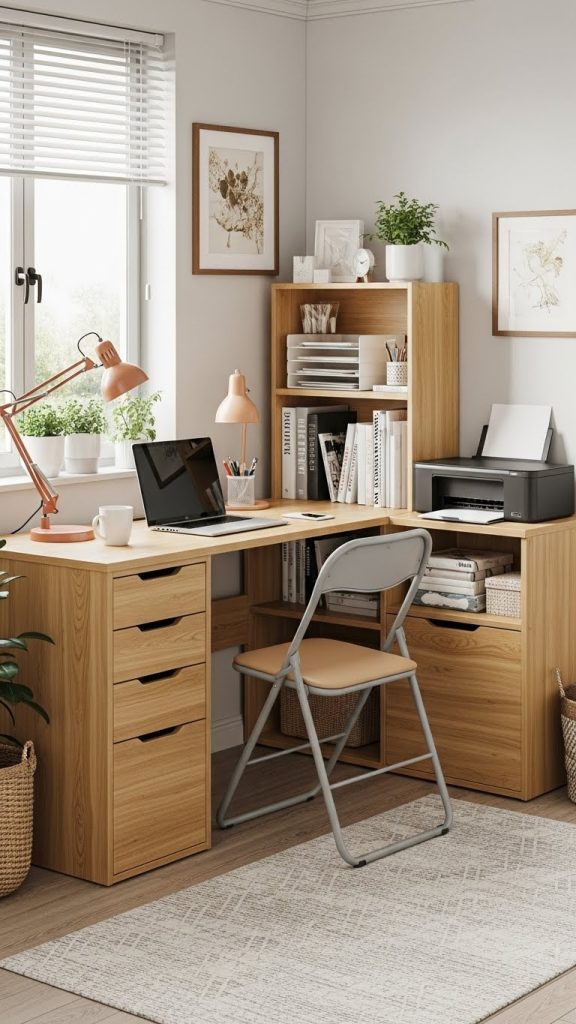
3. Choose Multi Functional Furniture
In a small home office, multifunctional furniture is one of the most efficient ways to maximize usability while maintaining a cozy environment. The goal is to choose pieces that serve more than one purpose, helping you make the most of limited square footage. Examples include a desk with built in storage, a foldable wall mounted writing surface, a cabinet that doubles as a printer station, or a chair with hidden storage under the seat. Before purchasing any furniture, measure your available space carefully and create a layout plan. Decide which functions are most essential to your workflow. For instance, if you need more filing space, a desk with drawers is ideal. If mobility is important, consider lightweight furniture that can be moved easily.
Materials to consider include wood, bamboo, metal frames, and durable laminates. When assembling multifunctional pieces, follow instructions carefully to ensure stability, especially if shelves or drawers will carry weight. A minimalist approach works best in small spaces, so avoid overly bulky or decorative items. Choose furniture with clean lines and neutral tones to maintain a cohesive look. By integrating multifunctional furniture, you create an office that feels spacious, organized, and efficient without sacrificing comfort and style. This reduces clutter and creates a calm environment ideal for focused work.
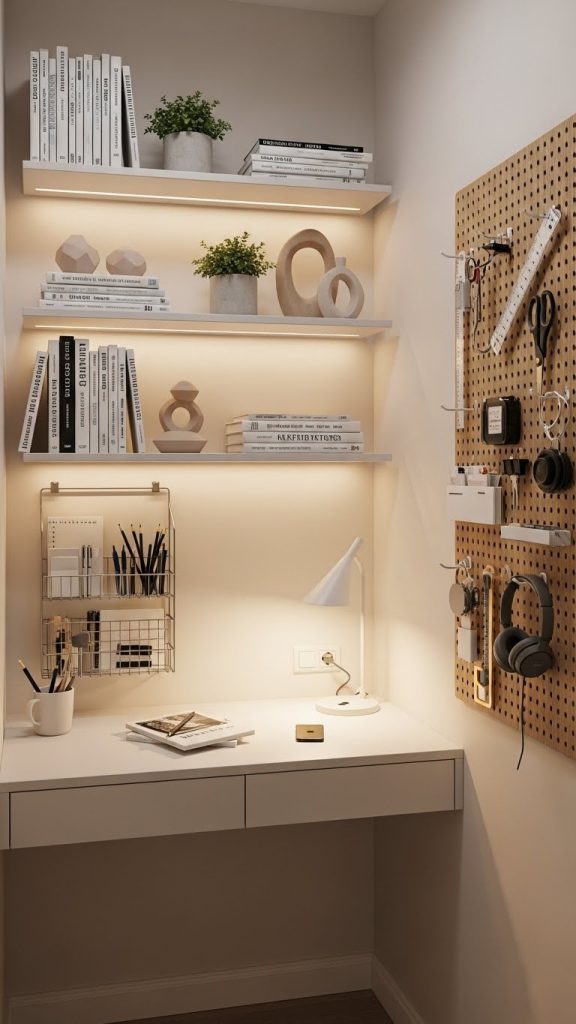
4. Create Vertical Storage Solutions
Vertical storage is an excellent strategy for small home offices where floor space is limited. Instead of adding more furniture on the ground, take advantage of wall space to keep your area organized while maintaining an open and airy feel. Wall mounted shelves, hanging baskets, pegboards, and vertical file organizers are all effective ways to maximize height. Preparing for this upgrade requires identifying which items need storage. Categorize your work essentials such as documents, stationery, electronics, and decor pieces. Once you have a clear list, measure your wall area and choose storage units that fit proportionally.
Materials needed may include wooden shelves, metal brackets, screws, a drill, pegboard panels, or hanging organizers made from fabric or wicker. When installing shelves, make sure they are properly anchored to support weight safely. Arrange your storage units in a visually pleasing way by mixing functional items with decorative pieces like framed photos, small plants, or candles. This helps blend practicality with aesthetics. Keeping everyday essentials within reach while placing less used items higher up ensures smooth workflow. Vertical storage not only enhances organization but also contributes to a cleaner, cozier workspace by reducing clutter on your desk and floor.

5. Incorporate Warm Lighting Layers
Lighting plays a crucial role in creating a cozy home office, especially in small spaces. A well lit environment enhances productivity while also offering comfort and warmth. Relying solely on overhead lighting can make the space feel harsh or sterile. Instead, incorporate layered lighting using different sources. Begin with a warm toned desk lamp that offers focused illumination for reading or typing. Add an ambient floor lamp or wall sconce to soften shadows and create a welcoming glow. If your desk is near a window, maximize natural sunlight by keeping curtains lightweight and shear.
Materials you may need include LED warm light bulbs, table lamps, plug in sconces, or string lights for decorative touches. Always choose bulbs with a warm color temperature to create a soothing atmosphere. Rearranging your lighting may require moving furniture slightly to avoid glare on your screen. Balance is important, so avoid overwhelming the space with too many lights. A combination of two or three sources is usually sufficient. Thoughtful lighting improves both mood and efficiency, transforming a small office into a cozy haven where work feels more enjoyable. Proper lighting also reduces eye strain and supports longer periods of focus.

6. Maximize Natural Light
Natural light is one of the most effective elements for creating a cozy and uplifting small home office. Sunlight not only brightens the space but also enhances mood, increases productivity, and makes the room feel larger. Start by choosing a workspace near a window whenever possible. This ensures that you benefit from daylight during working hours. Prepare the area by removing heavy curtains or blinds that block light. Instead, use light filtering fabrics or keep the window uncovered. Clean the glass to maximize clarity and brightness.
Materials to consider include lightweight curtains, adjustable blinds, reflective surfaces like mirrors, and a light colored desk to bounce natural light. If your workspace does not have direct window access, place a mirror opposite the light source to help distribute brightness. Keep the windowsill clear or decorate it with minimal items to avoid obstructing the flow of light. Plants that thrive in sunlight can add freshness without blocking visibility. Maintaining an uncluttered and bright area makes your home office feel more open, relaxed, and visually uplifting. This simple adjustment can completely transform the atmosphere, promoting focus while reducing fatigue throughout the day.

7. Add Plants for Freshness
Plants are a simple yet powerful way to create a cozy atmosphere in a small home office. They bring freshness, improve air quality, and add a natural element that balances the structured nature of workspaces. Even a tiny desk can accommodate a small potted plant or two. Before selecting plants, assess your lighting conditions. If your office receives ample sunlight, plants like succulents, spider plants, or pothos work well. For low light areas, consider snake plants or ZZ plants. Both are low maintenance and thrive with minimal care.
Materials you may need include pots, potting soil, watering tools, plant stands, and trays to catch water. Choose simple pot designs in neutral tones to maintain harmony with the rest of your decor. Preparation involves deciding how many plants your space can realistically support. Avoid overcrowding, as too many plants in a small area can create clutter. Instead, select one or two focal plants and possibly one small desk top plant. If floor space is limited, use hanging planters or wall mounted plant shelves. Adding greenery softens hard lines, supports relaxation, and creates a visually balanced environment, making your home office feel more comforting and inspiring.

8. Use Space Saving Desk Solutions
Choosing the right desk is essential when working with limited space. A bulky desk can overwhelm a small room, while a well chosen compact design enhances both comfort and efficiency. Space saving desk solutions include wall mounted foldable desks, narrow writing tables, corner desks, and ladder style desks that incorporate shelving. Begin by assessing your daily work needs. If you use a laptop and minimal paperwork, a narrow or floating desk may be sufficient. For tasks requiring more space, a corner desk or small workstation with built in storage works better.
Materials needed depend on your chosen style. Wall mounted desks require brackets, screws, and a drill, while freestanding desks may require only assembly tools. When preparing, measure the available space carefully and leave enough clearance for movement. Keep desk surfaces clear by using organizers or vertical storage systems. The right desk improves workflow and maintains a cozy environment without overcrowding the room. By selecting a compact yet functional design, you create a workspace that supports productivity while preserving the warmth and simplicity of your home. This approach allows even the smallest corner to become an efficient and comfortable office.
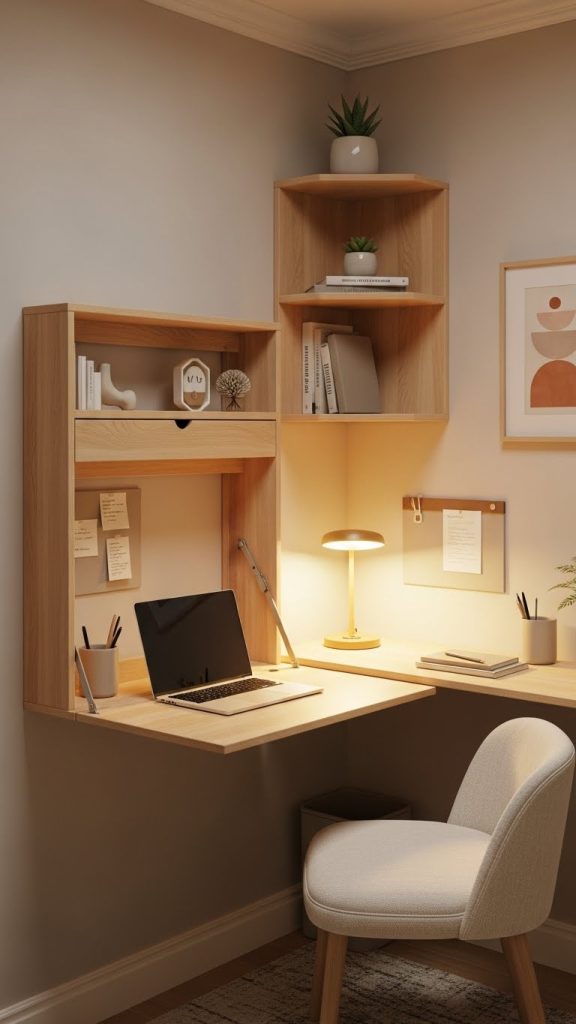
9. Personalize the Space with Simple Decor
Personal touches are what transform a basic office into a cozy and inviting workspace. In small areas, the key is to personalize without overwhelming. Choose a few meaningful items that reflect your style, such as framed artwork, inspirational quotes, a decorative clock, or a small collection of books. Prepare by identifying what inspires you and what contributes positively to your work mood. Avoid decor that is too large or too colorful, as it may dominate the limited space and create visual clutter.
Materials you may need include small frames, minimalistic desk accessories, soft toned artwork, and photo prints. Consider a small corkboard or magnetic board to display rotating items without using shelf space. A warm desk mat or wooden organizer can add personality while remaining functional. When arranging decor, keep the focus on balance. Combine practical items with aesthetic ones so the space feels both useful and meaningful. Personalizing a small workspace fosters emotional connection and comfort, making it easier to enjoy the time spent working. These subtle additions help your home office feel like an extension of your home rather than a temporary setup.

10. Keep the Space Minimal and Organized
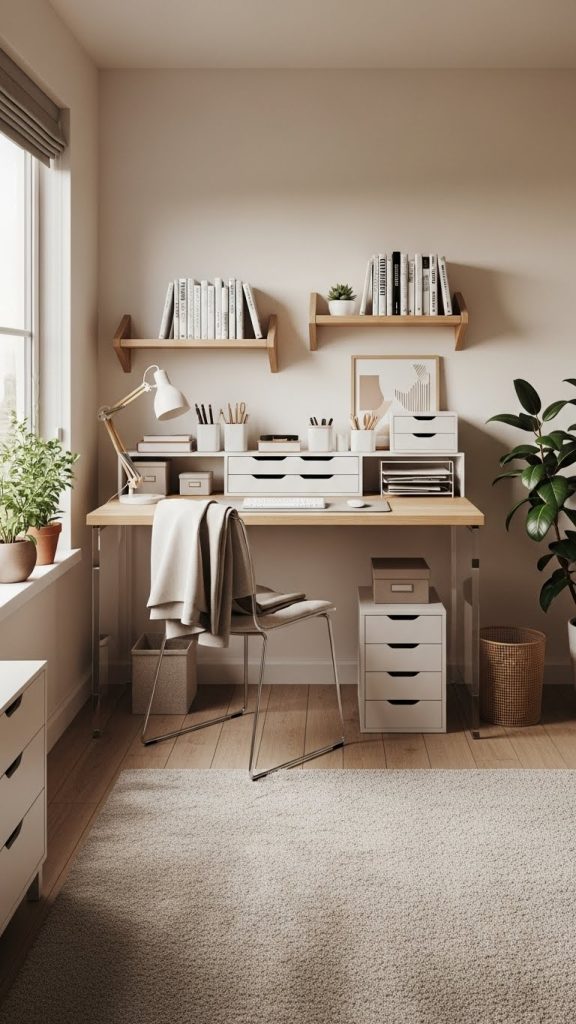
A cozy small home office relies heavily on organization. Clutter is one of the fastest ways to make a small space feel cramped and stressful. A minimalist approach ensures that every item serves a purpose and contributes to a peaceful environment. Begin by sorting your belongings and removing anything unnecessary. Prepare storage categories such as documents, electronics, stationery, and decor. Once everything is organized, assign each category a dedicated space. This prevents items from piling up and keeps the workspace tidy.
Materials may include file organizers, drawer dividers, boxes, trays, and digital storage tools to reduce paper clutter. Maintaining minimalism also involves adopting good habits, such as cleaning your desk at the end of each day and storing items immediately after use. Choose simple decor and avoid excessive accessories. A clean and organized space supports mental clarity, reduces distractions, and enhances productivity. By prioritizing minimalism, your small home office remains open, cozy, and enjoyable. This creates a harmonious balance between comfort and efficiency, helping you stay focused while feeling relaxed and grounded.
About Me

Chesung Subba
Author/Writer
Hello, I'm Chesung Subba, a passionate writer who loves sharing ideas, stories, and experiences to inspire, inform, and connect with readers through meaningful content.
Follow Me
Connect with me and be part of my social media community.
Leave a Reply